TLDR
More electrode surface area in contact with water means more places for electrolysis to happen at once, which means faster, more complete hydrogen generation per cycle. That's the logic behind using a dual-plate, platinum-plated titanium design instead of a single small plate.

Why surface area drives electrolysis speed
Electrolysis happens right at the surface of the electrode, where current meets water. The more surface area in contact with water, the more of the reaction can happen simultaneously instead of being bottlenecked through a small contact point.
Think of it like pouring water through a funnel versus a wide colander, same total volume, very different speed, because of how much surface is doing the work at once.
Electrolysis happens right at the surface of the electrode, where current meets water. More surface means more of the reaction happening at once.
Single plate vs. dual plate
A single small plate design limits how much water can be in electrolysis contact at any given moment. A dual-plate design roughly doubles that contact surface within the same chamber footprint.
- Single plate: lower total surface area, cycle takes longer to reach peak concentration
- Dual plate: more total surface area, more of the reaction happening in parallel
- Dual plate also spreads electrical load across two surfaces instead of concentrating it on one
How this connects to the 10,000 PPB peak
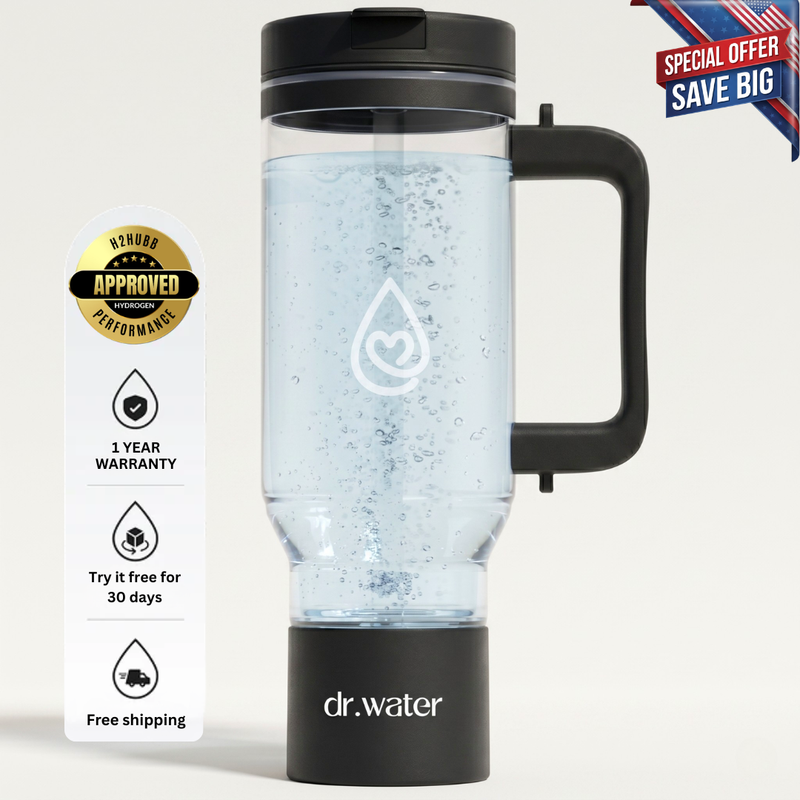
Plate surface area is one of the direct levers behind how much dissolved hydrogen a cycle can reach in a fixed amount of time. It's part of why the Hydrator Max reaches its peak of 10,000 PPB (10 ppm), measured on the device itself, within a standard cycle length.
The Hydrator Max reaches its peak of 10,000 PPB within a standard cycle length, measured on the device itself.
You could theoretically compensate for less surface area with a much longer cycle, but that costs more battery per cycle and cuts into the 30+ cycles per charge the battery is rated for. Getting the geometry right upfront is the more efficient answer than brute-forcing it with time.
What a small or thin plate limits
| Plate Design | Surface Area | Practical Effect |
|---|---|---|
| Dual platinum-plated titanium plates | High | Faster, more complete electrolysis per cycle |
| Single small plate | Low | Longer cycles, lower peak concentration |
| Thin or uncoated plate | Low, uneven catalytic surface | Inconsistent output, faster wear |
Why plate geometry doesn't show up on a spec sheet
Plate count and surface area are exactly the kind of detail that gets left out because it's harder to market than a single big number.
If you're comparing bottles, it's worth asking directly about plate design, not just the headline PPB figure, since the geometry is a big part of whether that number is realistic in daily use.
FAQ
Does more plate surface area really change hydrogen output?
Yes, electrolysis happens at the electrode surface, so more surface area in contact with water means more of the reaction can happen at once, which supports faster, more complete hydrogen generation per cycle.
Why not just use one large plate instead of two smaller ones?
A dual-plate layout fits more total surface area into the same compact chamber than a single plate of a similar footprint would, while also spreading electrical load more evenly.
Does plate design affect how long the electrode lasts?
Spreading current across more surface area, and across two plates rather than one, reduces the load concentrated on any single point, which supports longer electrode life alongside the platinum-plated titanium build.
How do I compare plate design between bottles?
Ask directly about plate count and material, platinum-plated titanium versus bare metal, single versus dual plate. A seller who can answer specifically is a good sign.
Plate geometry is one of those details that never shows up in a listing photo, but it's a big part of why the Hydrator Max reaches its rated dose reliably, cycle after cycle. It comes with a 30-day risk-free trial, so you can measure the results yourself instead of taking a spec sheet's word for it.