TLDR
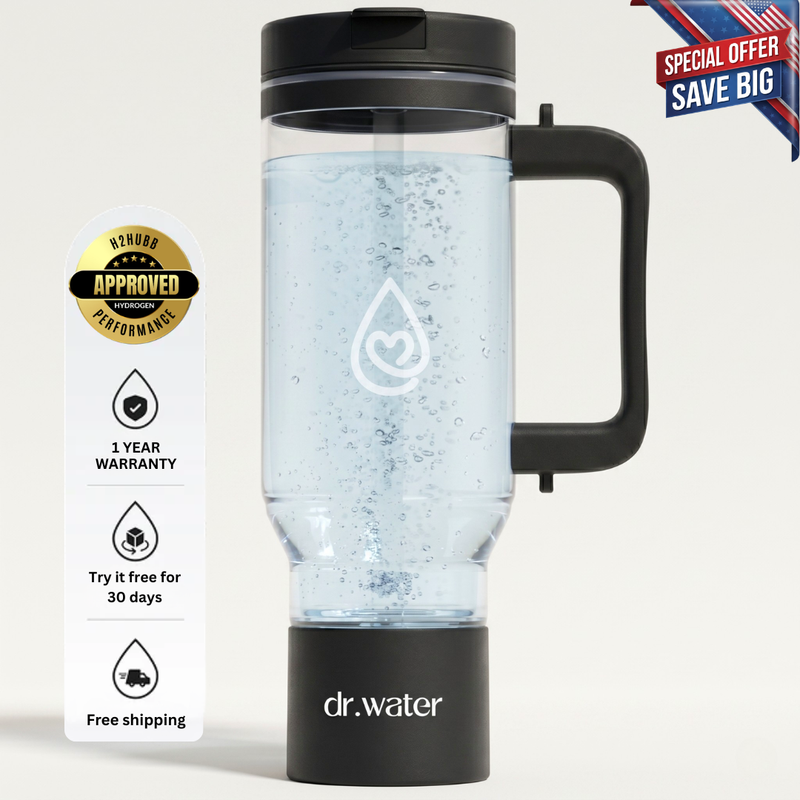
Hydrogen is the smallest molecule that exists, and it slips straight through the wall of most plastic bottles within hours. That's why the Hydrator Max holds its hydrogen inside a pressurized borosilicate glass chamber, not Tritan plastic. Glass keeps the gas locked in long enough to actually dissolve into your water.

Why plastic can't hold hydrogen in
A hydrogen molecule (H2) is the smallest molecule there is. It's smaller than oxygen, smaller than CO2, smaller than the water molecule carrying it. Most plastics, including food-grade Tritan, are made of long polymer chains with tiny gaps between them.
Hydrogen gas finds those gaps and works its way through the plastic wall itself, not just through seams or seals. This is called gas permeation, and it happens with any small gas molecule in almost any plastic, just at different rates.
For most bottled drinks this doesn't matter. Soda companies fight the opposite problem, keeping CO2 in. But hydrogen is roughly four times smaller than CO2, so a container built to hold soda fizz isn't built to hold H2.
A hydrogen bottle that reads high PPB in the lab can lose most of that dose by the time it reaches your mouth, if the chamber holding it is plastic.
Where Tritan plastic still makes sense
Tritan isn't a bad material. It's BPA-free, shatter-resistant, and it's what a lot of reusable water bottles are made from for good reason: it's light and it survives drops.
- Good for everyday water bottles, cold brew, and sports bottles
- Good for the outer shell of a device, where it never touches pressurized gas
- Not good for a sealed chamber meant to hold hydrogen gas under any pressure
That's actually why we still use a food-grade polymer, Makrolon, for the Hydrator Max's outer body. It's tough, BPA, PFA, and chlorine free, and it takes the daily bumps. It just isn't where the gas lives.
What borosilicate glass does differently
Borosilicate glass is a denser, harder glass than the soda-lime glass in a drinking cup. It's the same family of glass used in lab beakers and oven-safe cookware, because it holds its shape and seal under heat and pressure.
Inside the Hydrator Max, the electrolysis cell sits inside a pressurized borosilicate chamber. Glass has no polymer gaps for hydrogen to slip through, so the gas stays put and has time to actually dissolve into the water instead of leaking out through the container wall.
How glass and Tritan actually compare
| Property | Borosilicate Glass Chamber | Standard Tritan Plastic |
|---|---|---|
| Hydrogen gas permeability | Effectively sealed | Gas migrates through the wall over time |
| Heat resistance | Withstands boiling and iced water | Can warp under sharp temperature swings |
| Leaching risk | None, glass doesn't leach | Low, but plastic can leach under heat and wear |
| Best use in this bottle | Sealed hydrogen chamber | Not used for the gas chamber |
What this actually changes for you
In practice, this is the difference between a bottle that claims a high PPB number on a spec sheet and one that actually delivers it to your glass.
Glass has no polymer gaps for hydrogen to slip through, so the gas stays put long enough to actually dissolve.
It's also why the bottle is built the way it is: a tough Makrolon shell on the outside for daily use, sealed borosilicate glass on the inside where the gas actually needs to stay.
FAQ
Is Tritan plastic safe to drink from?
Yes, food-grade Tritan is BPA-free and widely used in reusable bottles. It's just not dense enough to hold pressurized hydrogen gas without losing it over time, which is why we don't use it for the gas chamber.
Why not just use glass for the whole bottle?
Glass is heavy and it shatters. We use pressurized borosilicate glass only where the gas actually needs to be sealed, and a tougher food-grade Makrolon shell everywhere else, so the bottle survives being dropped or tossed in a bag.
Does the glass chamber ever crack or wear out?
Borosilicate is built for exactly this kind of repeated heat and pressure cycling, the same glass used in lab and cookware applications. Normal use with RO, distilled, or filtered water is what it's designed for.
Can I tell if a bottle is actually using glass or just claiming it?
Ask the seller directly what material the sealed chamber is made from, not just the outer shell. If they can't answer specifically, that tells you something.
The Hydrator Max keeps its hydrogen sealed in glass, not plastic, and it comes with a 30-day risk-free trial so you can check the dose for yourself. Run it on your own water for a month, and send it back if it doesn't hold up.