TLDR
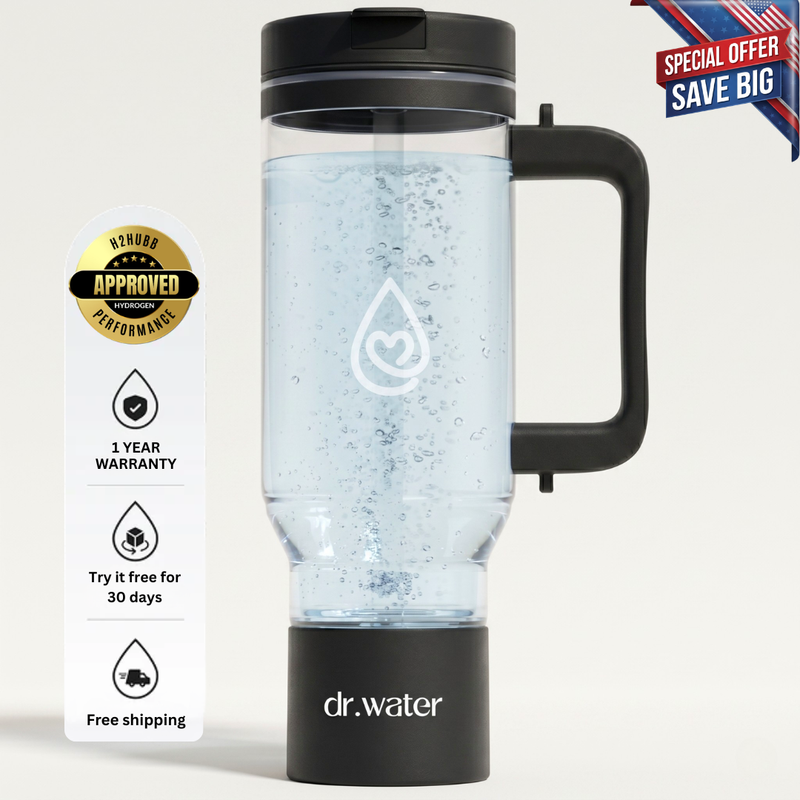
Leaching is when a container's material sheds trace particles into the liquid inside it, and it's a real concern with some plastics and lower-grade glass. Borosilicate glass is chemically stable and lead-free, which is why it doesn't leach into the water sitting in the Hydrator Max's sealed chamber.

What leaching actually means
Leaching is when trace amounts of a container's material migrate into the liquid it's holding, usually accelerated by heat, acidity, or time. It's a known issue with some plastics and with older or lower-grade glass and ceramic glazes.
It's not usually dramatic or immediate, it's a slow trace transfer that adds up over repeated use, which is exactly why material choice matters for anything you drink from daily.
Leaching is a slow trace transfer that adds up over repeated use, which is exactly why material choice matters for anything you drink from daily.
Where leaching risk actually comes from
- Some plastics can leach compounds when exposed to heat or repeated wear
- Lower-grade or colored glass has historically used lead compounds for clarity or tint
- Ceramic glazes can contain lead if not properly food-grade certified
- Metal containers can leach trace metals if the alloy or coating isn't stable
Why borosilicate glass doesn't leach
Borosilicate glass is chemically stable across a wide range of conditions, the same property that gives it its thermal shock resistance. It's formulated without lead and without the additives that create leaching risk in some plastics.
The Hydrator Max's chamber isn't just holding water, it's holding water during an active electrolysis cycle, with current running and gas being generated. A chemically unstable material in that environment would be a much bigger leaching risk than a passive drinking glass ever would be.
Borosilicate vs. other materials
| Material | Leaching Risk | Why |
|---|---|---|
| Borosilicate glass | None | Chemically stable, lead-free composition |
| Food-grade Makrolon (outer body) | Very low | BPA, PFA, and chlorine free by design |
| Low-grade colored glass | Possible | Historically may use lead for clarity or tint |
| Unrated plastics | Variable | Depends on additives and heat exposure |
What "lead-free" actually certifies
We don't use "lead-free" loosely. It means the glass composition contains no lead compounds at all, not merely "below a detectable threshold." That's a meaningfully higher bar.
"Lead-free" means the glass composition contains no lead compounds at all, not merely "below a detectable threshold."
Combined with the outer Makrolon shell being BPA, PFA, and chlorine free, the goal was to remove the usual leaching questions from every surface the water actually touches during a cycle.
This matters more the longer you own a bottle, not less. A single glass of water from an unstable material is a small exposure. Years of daily refills from the same container is where trace leaching, if it's happening at all, actually adds up.
Most hydrogen bottle marketing focuses entirely on the PPB number and skips the container question altogether. We'd rather you know exactly what the water sits in before it reaches your glass, since that's the part that determines whether "hydrogen water" is also clean water.
FAQ
Can borosilicate glass leach anything into my water?
No, borosilicate glass is chemically stable and lead-free, which is exactly why it's used anywhere a container needs to hold liquid repeatedly without shedding material into it.
Is the outer body of the bottle also leach-free?
Yes, the outer shell is food-grade Makrolon, which is BPA, PFA, and chlorine free.
Does using RO or distilled water reduce leaching risk further?
Leaching is a property of the container material, not the water source, so it doesn't change based on what water you use. RO and distilled water matter more for preventing mineral scale on the electrode and seals.
How is "lead-free" different from "low-lead"?
Lead-free means no lead compounds in the glass composition at all. Some lower-grade glass historically used lead for clarity or tint, even at levels marketed as "low," which is a different and lower standard.
What your water sits in matters as much as what's dissolved in it. The Hydrator Max comes with a 30-day risk-free trial, so you have a month to decide whether that lead-free glass chamber is worth it.