TLDR
Most hydrogen bottle leaks trace back to one small part: the silicone ring sealing the cap or chamber. Ours is medical-grade silicone rated to hold a pressurized cycle without breaking down from repeated compression, so the gas stays where it belongs, in your water.

Where the seals actually sit
A hydrogen bottle has to hold pressure during the electrolysis cycle, release it cleanly through the vent, then hold again the next time you press start. That's a lot of repeated compression for a couple of small rings.
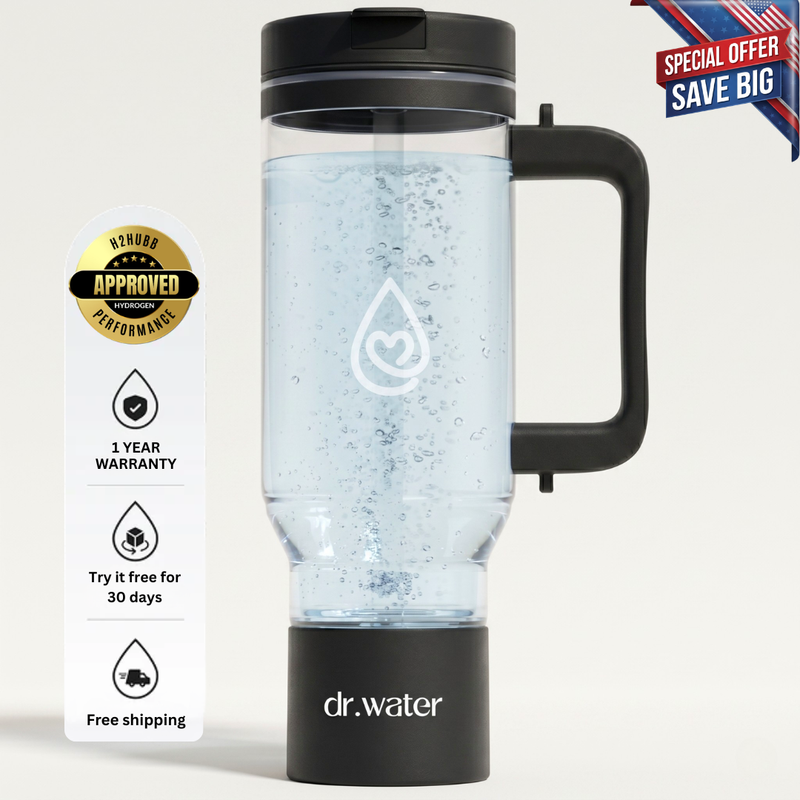
On the Hydrator Max, sealing rings sit at the cap-to-chamber junction and around the base, exactly where pressure builds during each cycle and exactly where a bad seal would show up first as a leak.
- Cap seal: keeps the pressurized chamber closed during the cycle
- Base seal: keeps the electrolysis compartment isolated from the rest of the bottle
- Vent seal: directs waste gas out through the vent path, not around it
Why silicone instead of rubber
Standard rubber gaskets degrade with repeated compression and moisture exposure. They harden, crack, and eventually stop sealing evenly. Silicone holds its shape and flexibility over far more compression cycles.
Silicone also doesn't absorb odors or hold onto residue the way some rubber compounds do, which matters in something you're running water through daily.
A gasket that's lost its flex doesn't leak all at once. It starts letting a little gas past every cycle, quietly cutting into your dissolved PPB before you'd ever notice a drip.
What "medical-grade" actually means
Medical-grade silicone is manufactured to a purity standard used in things like tubing and seals for medical devices: food-safe, no leaching, stable across a wide temperature range.
A cheaper silicone blend can look identical and still contain fillers or additives that break down faster under repeated pressure cycling. Medical-grade costs more to source, but it's the difference between a seal that lasts and one that needs replacing in a few months.
How seals fail over time
| Sign | What's Happening | What To Do |
|---|---|---|
| Cap feels loose after closing | Ring has started to compress permanently | Check for visible cracking or flattening |
| Faint gas smell near the cap | Vent seal isn't fully directing gas out | Inspect and clean the seal channel |
| Water around the base after a cycle | Base seal isn't seating fully | Remove, rinse, and reseat the ring |
| Visible white crust on the ring | Mineral scale from hard water | Descale with citric acid per schedule |
Keeping your seals leak-free
The single biggest thing you can do for seal life is use RO, distilled, or filtered water instead of hard tap water.
Beyond that, a quick rinse of the seal area after use and a periodic citric acid descale, if you notice scaling, keeps the rings seated correctly and sealing evenly.
FAQ
How do I know if my seal is actually leaking?
Look for a faint gas smell near the cap during or right after a cycle, or water pooling near the base after use. Both point to a seal that isn't seating fully.
Can I clean the silicone rings myself?
Yes, a rinse with water and, if there's visible scale, a citric acid descale handles most buildup. Avoid harsh solvents, which can degrade silicone faster than normal use would.
Why does hard water hurt the seals?
Dissolved minerals in hard tap water can crystallize on the ring surface, creating an uneven seat that leaks and speeds up wear. It's part of why we recommend RO, distilled, or filtered water for the electrolysis cycle.
How long should a silicone seal last?
With RO or filtered water and normal use, medical-grade silicone is built to handle a long run of compression cycles well beyond standard rubber gaskets. If you ever notice reduced sealing, it's a simple ring swap, not a bottle replacement.
Medical-grade seals are one of the small details that keep the Hydrator Max airtight cycle after cycle. It comes with a 30-day risk-free trial, so you can put your own water through it before you decide it's a keeper.