TLDR
An SPE/PEM membrane physically separates the anode and cathode sides of an electrolysis reaction, so hydrogen stays on one side and any ozone or chlorine byproduct stays on the other. Isolation only works if it's paired with a waste-gas vent that lets those byproducts actually leave the system.

In this guide
Two reactions, one piece of water
Electrolysis splits water into hydrogen and oxygen using electricity. But water isn't pure H2O in the real world. It carries trace chloride and other ions, and those can end up on the wrong side of the reaction if nothing separates the two electrodes.
At the cathode (negative electrode), water molecules pick up electrons and release hydrogen gas. At the anode (positive electrode), water and dissolved ions lose electrons, which can produce oxygen, but also traces of ozone and chlorine gas if chloride ions are present.
How the membrane mechanically separates them
An SPE/PEM (solid polymer electrolyte / proton exchange membrane) sits physically between the two electrode faces. It's a thin polymer sheet that only lets protons pass through, nothing else.
Think of it less like a filter and more like a wall with one very specific doorway. Protons are small enough to slip through that doorway. Hydrogen gas molecules, oxygen gas molecules, and any trace chlorine or ozone are not.
Without a membrane, both reactions happen in the same open volume of water. Any ozone or chlorine byproduct generated at the anode has nowhere to go but into the water you're about to drink.
That's the design flaw in a lot of older or budget hydrogen devices. They generate hydrogen just fine, but they don't account for what else forms alongside it, or where that byproduct ends up.
Where the byproducts actually go
Isolation alone isn't the full story. The design also needs a path for those anode-side byproduct gases to leave the system entirely, rather than build up in a sealed chamber.
- Water splits at each electrode face, separated by the membrane
- Hydrogen gas dissolves into the water on the cathode side
- Any ozone or chlorine gas generated at the anode is routed out through a waste-gas vent
- Only the hydrogen-enriched water ends up in the bottle you drink from
That vent is what turns "isolated" into "expelled." Isolation without an exit path just traps the byproduct gas somewhere else in the chamber, which is not the same thing as getting rid of it.
Both halves have to be present for this to actually protect the water you drink. A membrane with no vent is a half-finished design.
Isolation without an exit path just traps the byproduct gas somewhere else in the chamber. That's not the same thing as getting rid of it.
Why this distinction matters to you
| Design | What happens to ozone/chlorine byproducts |
|---|---|
| No membrane, open chamber | Mixes freely with the water |
| Membrane, no vent | Isolated, but can still build up in the chamber |
| Membrane + waste-gas vent | Isolated and expelled outside the system |
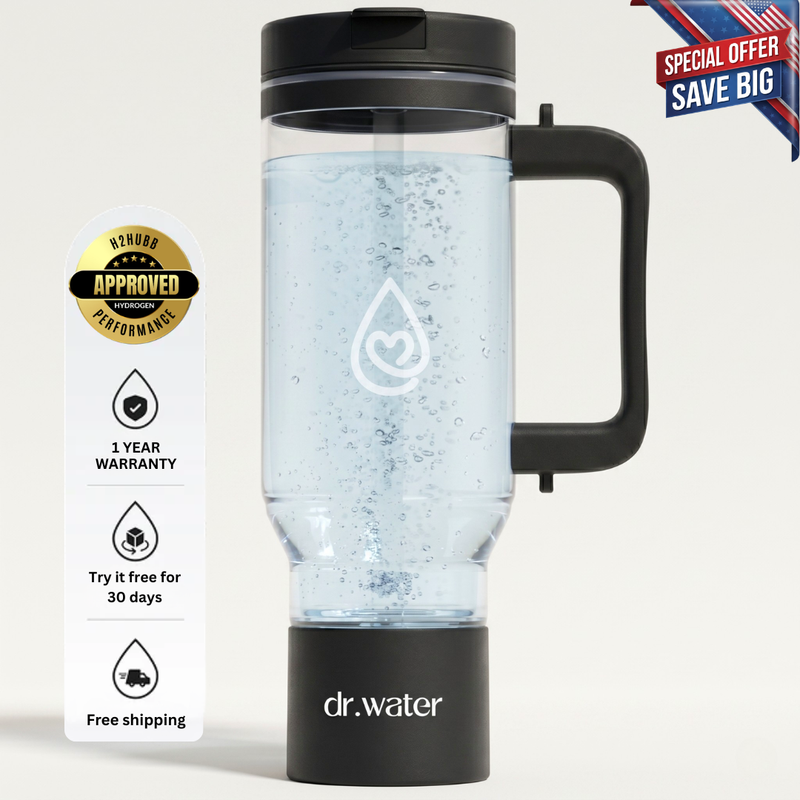
The Hydrator Max is built to the third row of that table: a certified SPE/PEM membrane paired with a waste-gas vent, so byproduct gases are separated at the source and then actually leave the system.
FAQ
What does an SPE/PEM membrane actually separate?
It physically separates the anode side and cathode side of the electrolysis reaction, so hydrogen gas produced at the cathode never mixes with any ozone or chlorine gas produced at the anode.
Does isolating the gases mean they disappear?
No. Isolation keeps them from mixing into your water, but the design also needs a waste-gas vent so those byproduct gases actually leave the chamber instead of building up inside it.
Why would chlorine gas form during electrolysis at all?
Tap and even some filtered water can carry trace chloride ions. At the anode, those ions can be oxidized into chlorine gas, which is exactly why anode-side isolation and venting matter.
Is this the same as a basic water ionizer?
No. Standard countertop ionizers typically don't use a true proton exchange membrane. We cover that difference in our PEM vs. standard electrolysis article.
If you want a bottle built around this thinking, the Hydrator Max ships with a certified SPE/PEM membrane, a platinum-plated electrode, and a waste-gas vent, backed by a 30-day risk-free trial. Check it out here.