TLDR
The base O-ring is what keeps the electrolysis chamber pressure-sealed during a cycle, and it's under more repeated stress than almost any other part of the bottle. Medical-grade silicone is what holds that seal cycle after cycle without hardening or cracking, which is the difference between an airtight bottle and a slow gas leak you won't notice until your PPB drops.

What the base O-ring actually seals
The base of the bottle is where the electrolysis chamber connects to the rest of the assembly. During a cycle, that chamber is pressurized, and the O-ring at the base is what keeps that pressure from escaping around the joint instead of staying in the water.
It's a small part doing a specific job under real physical stress, every single cycle, day after day.
Why O-ring quality is easy to overlook
An O-ring is cheap and small, so it's an easy place for a manufacturer to cut cost without it showing up in a spec sheet or a product photo. Nobody markets "premium O-ring" on the box.
- Cheap rubber O-rings compress permanently within weeks of daily use
- Generic silicone blends can contain fillers that shorten flex life
- Medical-grade silicone is purpose-built to hold shape through thousands of compression cycles
A degraded O-ring doesn't announce itself. It just quietly lets a little pressure escape every cycle until your dissolved hydrogen reading drops and you're not sure why.
What "medical-grade" actually changes
Medical-grade silicone is manufactured to a purity and consistency standard used for device seals and tubing that have to perform reliably without degrading unpredictably.
The practical difference is compression set, how much an O-ring permanently deforms after being squeezed repeatedly. Medical-grade silicone resists that deformation far longer than a generic rubber or low-grade silicone blend, which is exactly what a base seal under daily pressure cycling needs.
How a failing O-ring shows up
| Symptom | Likely Cause | What To Check |
|---|---|---|
| Cycle completes but PPB reads lower than usual | Pressure escaping at the base seal | Inspect O-ring for flattening or cracks |
| Faint hissing sound during a cycle | Gas escaping around the seal instead of the vent | Check O-ring seating and cleanliness |
| Moisture around the base after use | Seal not fully seated | Remove, rinse, reseat the O-ring |
| Visible cracks or a stiff, brittle ring | Material has degraded past its usable life | Replace the O-ring |
Keeping the base seal working
Using RO, distilled, or filtered water is the single best thing you can do for O-ring life. Mineral scale from hard tap water is what accelerates wear on any silicone seal in this bottle.
Using RO, distilled, or filtered water is the single best thing you can do for O-ring life.
It also helps to rinse the base area after each cycle rather than letting residue sit until your next descale. A minute of rinsing is a lot cheaper, in time and in wear, than waiting for scale to build up on the ring over weeks.
None of this is complicated maintenance. It's closer to rinsing out a coffee cup than anything resembling a repair, and it's the reason a well-cared-for O-ring can outlast a lot of the plastic parts on cheaper generators.
FAQ
What does the base O-ring actually do?
It seals the electrolysis chamber so pressure builds correctly during a cycle instead of escaping around the base joint, which is part of how the bottle reaches its full dissolved hydrogen level.
How do I know if my O-ring needs replacing?
Watch for a lower-than-usual PPB reading, a faint hissing during the cycle, or visible cracking and stiffness in the ring itself. Any of those point to a seal that's past its usable life.
Why medical-grade silicone instead of standard rubber?
Medical-grade silicone resists permanent compression far longer than standard rubber, which matters for a part that's squeezed and released every single cycle.
Can hard tap water damage the O-ring?
Yes, mineral scale from hard water builds up on silicone seals faster than RO or filtered water would, which is why we recommend those sources and a citric acid descale if you notice scaling.
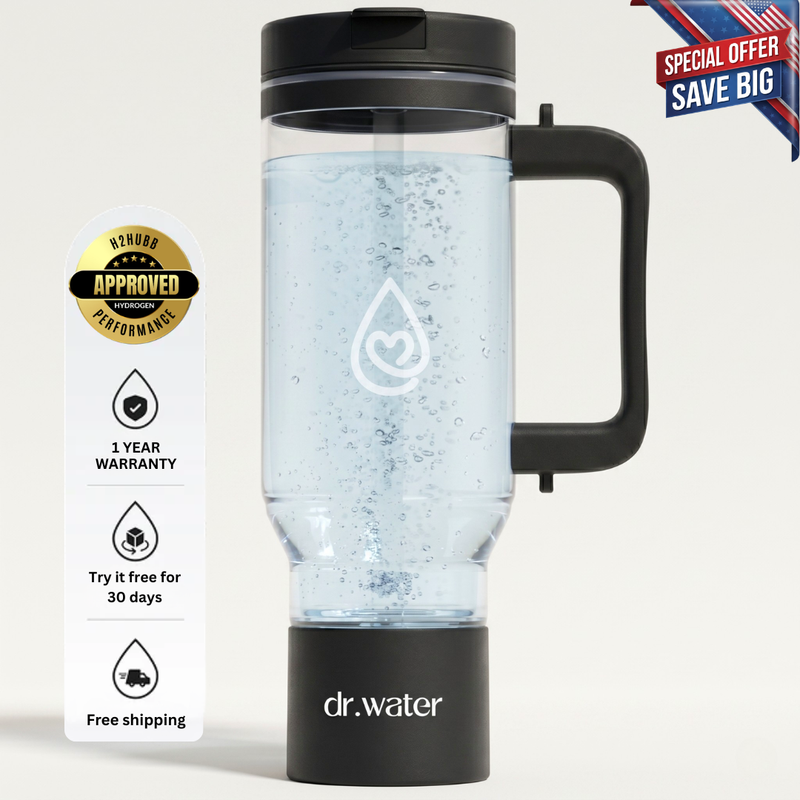
A seal that holds is a seal you never think about, which is the point. The Hydrator Max comes with a 30-day risk-free trial, so you can watch your PPB reading stay steady over real use instead of taking our word for it.