TLDR
The electrode plate is the one part of a hydrogen bottle that sits directly in your water and carries live current every cycle. Ours is grade 1 titanium plated in platinum, chosen because titanium won't corrode in water and platinum is what actually splits the water molecule cleanly. Cheaper metal plates corrode, and corroding metal in your water is a real problem.

What the electrode plate actually does
Electrolysis is just running a current through water to split H2O into hydrogen and oxygen. The plate is where that current makes contact with the water, so it's doing more electrochemical work than any other part of the bottle.
Every cycle, that plate sits submerged, carries current, and is exposed to whatever's dissolved in your water. Whatever it's made of, it needs to survive that daily without shedding anything into your glass.
Why titanium, not stainless steel
Stainless steel is fine for a water bottle wall. It's a poor choice for an electrode, because steel corrodes under sustained electrical current in water, especially with any dissolved minerals present.
Grade 1 titanium is different. It forms a stable oxide layer on its surface that resists corrosion even under repeated electrolysis cycles, which is why titanium shows up in medical implants and marine hardware, environments where corrosion simply isn't an option.
- Grade 1 titanium is commercially pure, the most corrosion-resistant titanium grade
- Won't rust or pit under repeated electrical current
- Doesn't react with RO, distilled, or filtered water
The electrode is the only bottle component that's both submerged and electrically live at the same time.
Why the platinum plating matters
Titanium resists corrosion, but it isn't the best catalyst for splitting water efficiently on its own. Platinum is. It's one of the most effective catalysts known for electrolysis, which is why it's used in fuel cell and lab electrolysis equipment.
Cost is the honest answer. Solid platinum electrodes would push the price of any consumer device far past what's reasonable. Plating gets you the platinum surface where the reaction happens without needing a solid platinum plate.
What a cheap electrode looks like over time
| Electrode Type | Corrosion Risk | Typical Behavior |
|---|---|---|
| Platinum-plated grade 1 titanium | Very low | Stable output cycle after cycle |
| Bare stainless steel | Moderate to high | Pitting, discoloration, degraded output over months |
| Uncoated base metal alloys | High | Visible corrosion, particles can shed into water |
How this ties into venting
Splitting water doesn't just make hydrogen, it also produces trace byproduct gases like chlorine and ozone, depending on the water source. That's why the Hydrator Max uses SPE/PEM electrolysis with a waste-gas vent, so those byproducts are expelled out of the bottle instead of dissolving into your water alongside the hydrogen.
The electrode and the venting system work together. A stable, non-corroding electrode plus a proper vent path is what makes daily electrolysis in a bottle you drink from actually safe.
Any corrosion or shedding at the electrode goes directly into your glass. That makes material choice a safety decision, not a spec sheet line.
FAQ
What is grade 1 titanium?
It's the most commercially pure grade of titanium available, valued for its corrosion resistance rather than raw strength. It's a common choice in medical and marine applications where a metal has to sit in contact with liquid indefinitely without degrading.
Does platinum plating wear off over time?
Platinum plating is applied specifically to withstand repeated electrolysis cycling. Using RO, distilled, or filtered water and following the descale schedule keeps mineral buildup from stressing the plate prematurely.
Can I use tap water with the electrode?
The Hydrator Max is built for RO, distilled, or filtered water. Minerals in hard tap water can scale onto the plate over time, which is what the citric acid descale routine is for.
Why does the electrode matter more than people think?
It's the one part of the bottle carrying live current while fully submerged in the water you drink. Any corrosion or shedding there goes directly into your glass, so the material choice is a safety decision, not a spec sheet line.
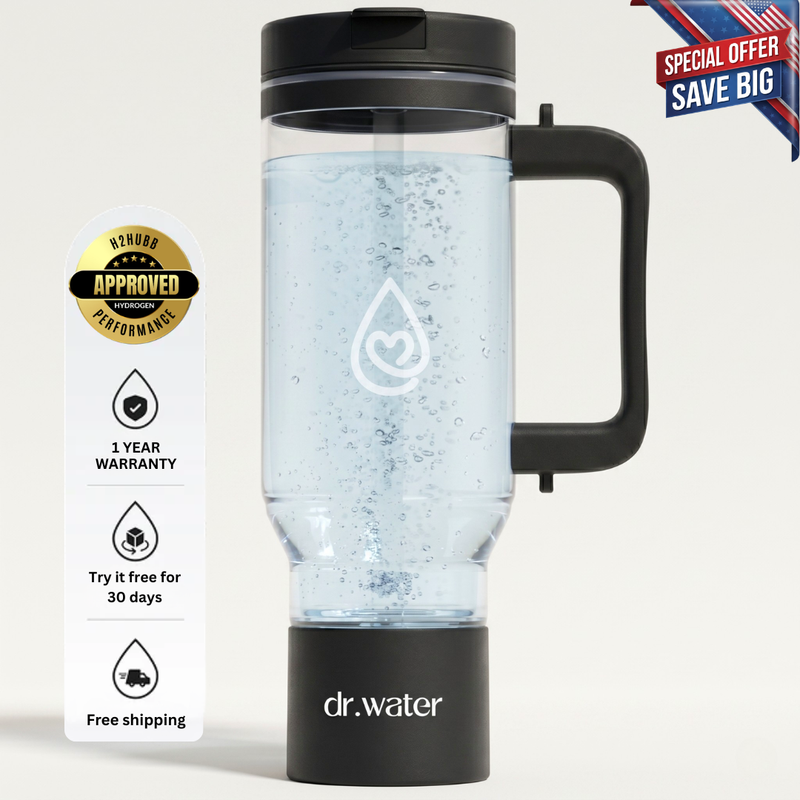
The platinum-plated titanium plate inside the Hydrator Max is built to hold up to daily electrolysis without corroding into your water. It comes with a 30-day risk-free trial, and if the build quality doesn't convince you, send it back.