TLDR
Molecular hydrogen is only flammable in air above roughly 4% by volume. Hydrogen dissolved in drinking water sits at parts-per-billion concentrations, many orders of magnitude below that threshold. Hydrogen water carries no meaningful fire or explosion risk.

In this guide
Where this question comes from
Hydrogen has a reputation. Most people's mental image is the Hindenburg, or a chemistry class demonstration with a popping balloon. So it's a fair question: if my water bottle is generating hydrogen gas, is that a fire or explosion risk sitting on my counter?
The short answer is no, and the reason comes down to concentration, not the fact that hydrogen is technically flammable in the right conditions.
Every flammable gas needs enough of itself present, mixed with enough oxygen, in a confined enough space, before combustion becomes physically possible. Hydrogen water doesn't come close to meeting those conditions at once.
Why concentration is the whole story
Hydrogen gas is flammable in air within a specific concentration range, roughly 4% to 75% hydrogen by volume in air, known as its flammability limits. Below that lower limit, there simply isn't enough hydrogen present for combustion to sustain itself.
Dissolved hydrogen in hydrogen water is measured in parts per billion. The lower flammability limit in air is roughly 4% by volume. Those numbers aren't close.
There's also a difference between hydrogen dissolved in liquid water and hydrogen as a free gas in open air. Dissolved gas at PPB levels isn't sitting around as a combustible headspace. It's molecularly dispersed through the water itself.
What about inside the device itself?
This is where design matters more than the water. A well-built electrolysis device manages any gas generated during a cycle through isolation and venting, rather than letting it accumulate in a sealed headspace.
- A waste-gas vent gives byproduct gases an exit path instead of letting them build up
- A pressure relief valve in the lid handles any pressure buildup safely (see our safety valve article for more)
- Short cycle times limit how much total gas is generated per session
Putting the numbers in perspective
| Scenario | Hydrogen concentration | Flammability risk |
|---|---|---|
| Hydrogen water (dissolved) | Parts per billion | None, far below flammable range |
| Lower flammability limit in air | ~4% by volume | Threshold where risk begins |
| Industrial hydrogen storage | Can approach 100% | Requires dedicated safety engineering |
Hydrogen water sits nowhere near the range where flammability becomes a real consideration. The gas concentration involved is a rounding error next to what's actually needed for combustion.
So, is hydrogen water a fire risk?
Molecular hydrogen dissolved in drinking water, at the PPB levels these devices produce, is not a fire or explosion risk. The chemistry that makes hydrogen dangerous in industrial or high-concentration settings doesn't apply at parts-per-billion dissolved concentrations in a glass of water.
It's a reasonable question given hydrogen's reputation. The math just doesn't support the worry once you look at the actual concentrations involved.
FAQ
Can hydrogen water explode or catch fire?
No. Dissolved hydrogen in hydrogen water is measured in parts per billion, far below the roughly 4% by volume in air needed for hydrogen to become flammable.
Why is hydrogen gas considered flammable at all then?
Hydrogen is flammable within a specific concentration range in air. That range is relevant to industrial gas storage and handling, not to trace dissolved gas in a glass of water.
Does the electrolysis process itself create a fire risk while it's running?
A well-built device manages gas generation through isolation and a waste-gas vent, so gas doesn't accumulate in a sealed headspace during the cycle.
Is it safe to store a hydrogen water bottle near heat or flame?
Normal common-sense precautions around any electronic device apply, but the trace hydrogen concentrations involved don't create a meaningful combustion risk on their own.
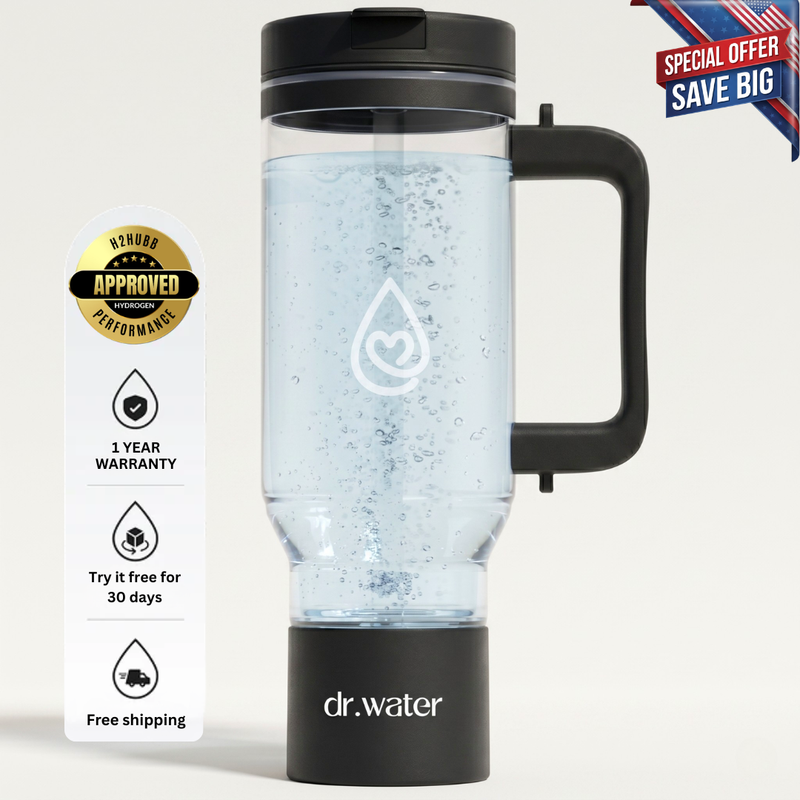
If you want a bottle built around this thinking, the Hydrator Max ships with a certified SPE/PEM membrane, a platinum-plated electrode, and a waste-gas vent, backed by a 30-day risk-free trial. Check it out here.