TLDR
Whoop and Oura score recovery from heart rate variability, not from what you drink. Molecular hydrogen has been studied as a selective antioxidant that may lower post-exercise oxidative stress markers, which is part of what feeds a good HRV reading. Nobody has run a trial linking hydrogen water directly to Whoop or Oura scores, so treat this as a month-long experiment on yourself, not a guaranteed number.

What HRV actually tracks
Heart rate variability is the tiny variation in time between each heartbeat. Whoop and Oura both use it as a proxy for how much stress your nervous system carried overnight, from workouts, alcohol, poor sleep, or a cold coming on. A higher HRV generally reads as your body handled yesterday well.
Neither device measures hydration or antioxidant status directly. They infer recovery from heart rhythm, respiratory rate, and skin temperature, then hand you a single score to act on.
HRV is a stress marker, not a hydration meter.
Why oxidative stress matters for your score
Intense exercise, poor sleep, and alcohol all raise oxidative stress, small amounts of cell damage from reactive oxygen species. Your body clears some of this on its own. Chronic overload is part of what a tanked recovery score is indirectly picking up on.

Molecular hydrogen (H2) is a small, neutral molecule that diffuses easily into cells. It has been studied as a selective antioxidant, meaning early research suggests it may target the more damaging free radicals without wiping out the ones your body uses for normal signaling.
- Reactive oxygen species: normal byproduct of exercise and metabolism
- Too much, too fast: linked to slower perceived recovery
- Selective antioxidants: studied for targeting excess without blunting useful signaling
What the research actually shows
A 2020 review in Medical Gas Research (Ostojic et al.) looked at hydrogen-rich water and post-exercise recovery markers in athletes, reporting reductions in blood lactate and subjective fatigue after several weeks of regular use. Smaller trials have reported drops in markers like malondialdehyde, a common lab measure of oxidative stress.
This is early-stage, exercise-physiology research. Nobody has published a large trial tying hydrogen water directly to Whoop or Oura recovery scores, so I won't tell you it will move your number by a fixed amount.
No study has tied hydrogen water directly to a Whoop or Oura score. Treat this as a month-long experiment on yourself, not a guaranteed number.
Running your own 30-day test
If you already wear a tracker, you have the data collection half done. Here is how I'd structure it so the result actually means something instead of being noise.
- Screenshot your current 30-day HRV and recovery trend as a baseline
- Add one full hydration cycle of hydrogen water first thing in the morning, before food or coffee
- Hold sleep, training load, and alcohol as close to your normal pattern as you can
- Check the weekly trend line at day 14 and day 30, not a single morning
- Compare the trend, not one good or bad day, since HRV swings daily regardless
What the Hydrator Max brings to it
If you're going to run this experiment, the water matters. Cheap unvented generators can leave trace chlorine or ozone dissolved in the water instead of expelling it, which works against the point of the exercise.
| Spec | Hydrator Max |
|---|---|
| Peak dissolved H2 | 10,000 PPB (10 ppm), measured on-device |
| Electrolysis method | SPE/PEM, platinum-plated electrode |
| Waste gas | Vented out, not dissolved into your water |
| Water compatibility | RO, distilled, or filtered (no mineral packets mid-cycle) |
| Battery | 4500 mAh, 30+ cycles per charge |
FAQ
Will hydrogen water definitely raise my Whoop or Oura recovery score?
I can't promise that. The research on hydrogen water and oxidative stress markers is real but early, and no study has tied it directly to a specific tracker's score. Run your own 30-day trend and see what your body shows you.
How long before I'd notice any change on my tracker?
Most of the small trials that exist ran two to four weeks of consistent use before reporting any measurable shift in fatigue or lactate markers. A single day of drinking hydrogen water is not a fair test.
Does the type of water I start with matter?
Yes. Use RO, distilled, or filtered water in the cycle. Don't add electrolyte powders or minerals before electrolysis, mix them in after the cycle finishes.
Will drinking hydrogen water throw off my HRV readings themselves?
No. It has no caffeine, sugar, or stimulant effect that would directly move your heart rhythm the way coffee or alcohol does.
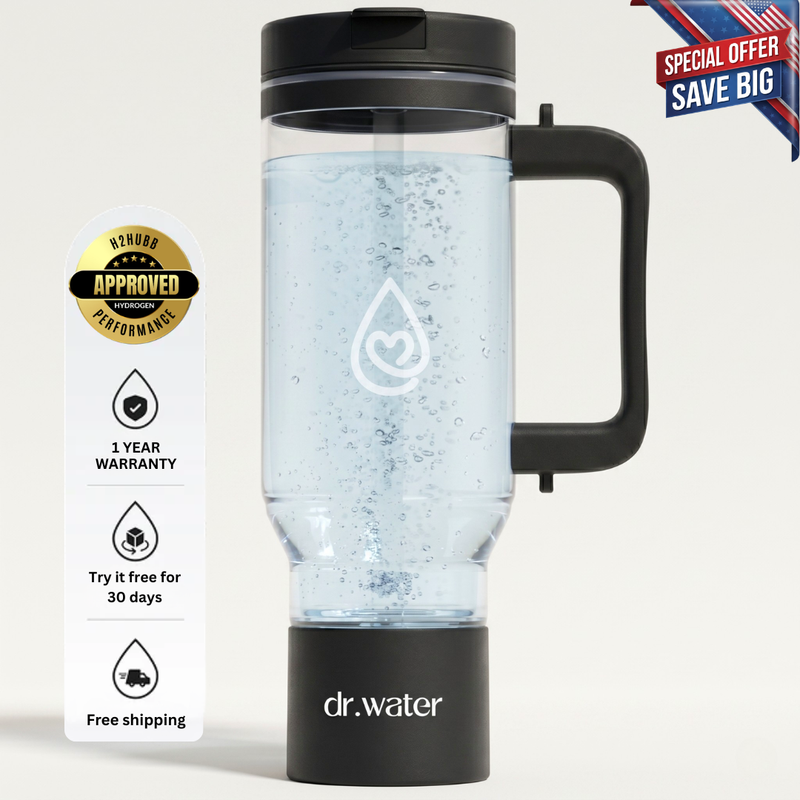
If you want real data instead of a guess, the Hydrator Max comes with a 30-day risk-free trial. Wear your Whoop or Oura through the month and let your own trend line make the call.
⚕️ Clinicians' Choice
2,033 clinicians share Dr. Water on VerifiedMD without compensation.