TLDR
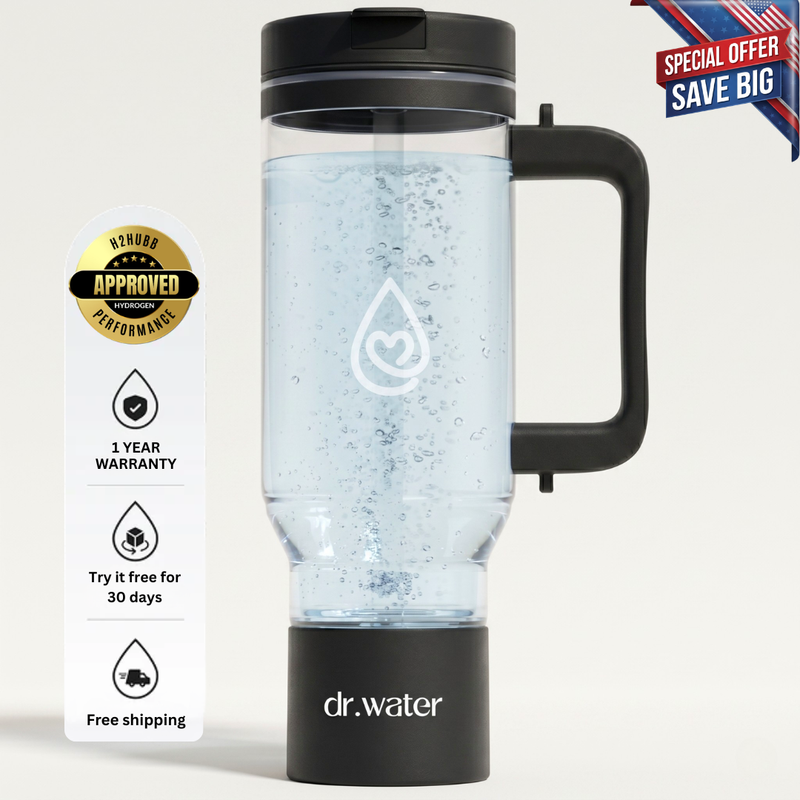
That chlorine or pool-like smell is chlorine gas, a normal byproduct of electrolysis that a properly vented device pushes out instead of dissolving into your water. Older plate-electrode bottles without a dedicated vent tend to trap it. The Hydrator Max uses an SPE/PEM membrane with a waste-gas vent specifically to keep that gas out of what you drink.

What's actually happening in there
Electrolysis splits water into hydrogen and oxygen. That's the part every bottle advertises. What most don't mention is that ordinary tap water also contains chloride ions, and running current through it can produce small amounts of chlorine and ozone gas as a side reaction.
In a well-designed device, that gas gets vented out through a dedicated port, away from the water you're about to drink. In a poorly vented device, it has nowhere to go except into the chamber with everything else.
Plate electrodes vs SPE/PEM membranes
A lot of older and budget bottles use a simple plate electrode sitting directly in the water. It's cheap to manufacture, but it doesn't separate the hydrogen production from everything else happening in the reaction.
This is the same design principle used across a wide range of industrial and lab-grade electrolysis equipment, adapted down to bottle size. It's not exotic technology, it's just more expensive to build correctly than a plate.
Warning signs it's time to replace
Run through this list. If two or more apply to your current bottle, it's worth shopping for a replacement.
- A chemical or pool smell during or right after a cycle
- No visible vent hole or port on the device
- The manufacturer doesn't state a membrane type (SPE, PEM, or otherwise) anywhere in the spec sheet
- The dose is quoted as a range or "up to" number with no on-device measurement
- Discoloration or a metallic taste developing over months of use
How your old bottle stacks up against the Hydrator Max
| Feature | Typical older plate bottle | Hydrator Max |
|---|---|---|
| Electrode type | Plain plate | Platinum-plated SPE/PEM membrane |
| Waste gas handling | Often none, stays in water | Dedicated vent, expelled not dissolved |
| Peak dissolved H2 | Usually unmeasured | 10,000 PPB, measured on-device |
| Chamber material | Varies | Pressurized borosilicate glass |
What to look for in a replacement
Don't just replace a smelly bottle with another unknown. Confirm the membrane type and venting design before buying, not after.
- Ask directly: does this vent waste gas, and where?
- Ask what the electrode is made of. Platinum-plated is standard for SPE/PEM cells.
- Use RO, distilled, or filtered water once you switch. Don't run mineral mixes or electrolyte powders through the electrolysis cycle itself; add those after.
- Use the self-clean function between sessions. Ours runs a 60-second UV cycle in the cap to keep the chamber clean between fills.
We've shipped more than 12,000 Hydrator Max bottles, backed by a 30-day risk-free trial and support based in the USA if anything feels off during setup.
FAQ
Why does my hydrogen water bottle smell like chlorine?
It's chlorine gas, a byproduct of electrolysis on tap water. A properly vented device routes it out; an unvented or poorly designed one leaves it in the chamber with your water.
A properly vented device routes chlorine gas out. An unvented one leaves it in the chamber with your water.
Is it safe to keep using a bottle that smells like chlorine?
We'd recommend replacing it. A persistent chemical smell during use is a sign the byproduct gas isn't being vented properly, which defeats the point of drinking clean hydrogen water.
What's the difference between a plate electrode and SPE/PEM?
A plate electrode sits directly in the water with no separation from byproduct gases. An SPE/PEM membrane physically separates hydrogen production from waste gas, allowing it to be vented instead of dissolved.
Does the Hydrator Max ever produce a chlorine smell?
Its SPE/PEM membrane and dedicated waste-gas vent are designed specifically to expel chlorine and ozone byproducts instead of letting them dissolve into your water.
Ready to replace a bottle that smells off? Try the Hydrator Max with a 30-day risk-free trial.