TLDR
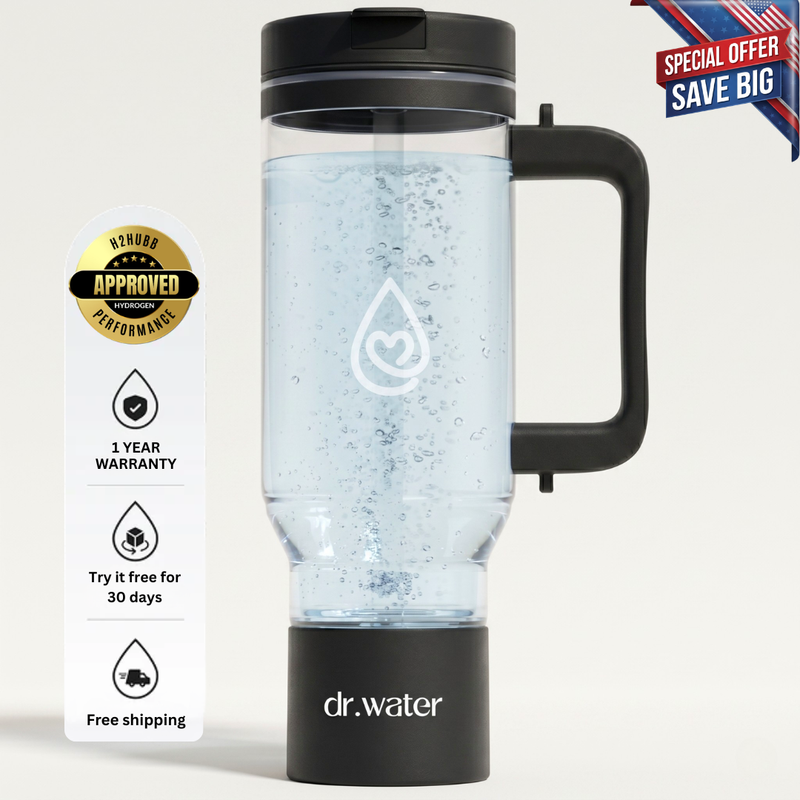
Most $30 hydrogen bottle returns come down to the same three things: no measurable dose, no venting, and a battery that dies in a week. Those aren't bad luck, they're what you get at that price point. The Hydrator Max is built to fix all three at once: 10,000 PPB measured on-device, vented SPE/PEM electrolysis, and a 4500 mAh battery good for 30+ cycles.

Why you probably returned it
If you sent back a cheap hydrogen bottle, it was probably one of these: the water didn't taste any different, it smelled faintly chemical, or the battery stopped holding a charge within a couple weeks. Sometimes all three at once.
None of that means hydrogen water doesn't work. It usually means the specific device you bought wasn't built to actually deliver a measurable dose safely.
What $30 actually buys
There's a real cost floor for building a hydrogen generator that measures its output, vents byproduct gas, and survives daily cycling. A $30 price point generally can't clear that floor.
There's a real cost floor for a generator that measures its output, vents gas, and survives daily cycling. Thirty dollars doesn't clear it.
Here's where the corners usually get cut at that price:
- Plate electrode instead of an SPE/PEM membrane, which is cheaper but doesn't separate byproduct gas from your water
- No stated ppb measurement, or a number pulled from a best-case lab test rather than the actual unit you receive
- A small, low-cycle battery that degrades fast under repeated use
- Chamber materials that aren't disclosed beyond "food-grade plastic"
How a $30 bottle stacks up against the Hydrator Max
| Spec | Typical $30 bottle | Hydrator Max |
|---|---|---|
| Peak dissolved H2 | Rarely measured | 10,000 PPB, measured on-device |
| Electrode / membrane | Basic plate | Platinum-plated SPE/PEM |
| Waste-gas venting | Often none | Dedicated vent |
| Battery | Unspecified, degrades fast | 4500 mAh, 30+ cycles per charge |
| Price | ~$30 | $299 |
| Return policy | Standard marketplace return | 30-day risk-free trial |
Red flags to check before buying again
Whatever you buy next, run it through these before you click purchase:
- No measured ppb number anywhere in the listing
- No mention of a membrane type (SPE, PEM, or otherwise)
- No stated chamber material beyond "BPA-free plastic"
- Battery specs missing or vague ("long-lasting" with no mAh number)
- Return window under 30 days, or refunds only as store credit
Getting it right this time
The upgrade path isn't complicated. You just need a device that discloses its numbers and backs them with a real return policy while you test it.
- Use RO, distilled, or filtered water for the electrolysis cycle
- Skip additives and mineral powders during the cycle itself; add those in after
- Run the 60-second UV self-clean cap between uses to keep the chamber in good shape
We've shipped over 12,000 Hydrator Max bottles with USA-based support behind them, so if something's off, you're not stuck arguing with a marketplace return form.
FAQ
Why didn't my cheap hydrogen bottle actually do anything?
Most budget bottles at very low price points don't measure or disclose their actual dissolved hydrogen output, and many use basic plate electrodes that produce inconsistent results.
Is a more expensive hydrogen bottle actually better, or just marketing?
Price alone doesn't guarantee quality, but the engineering that produces a measured, vented dose (SPE/PEM membrane, platinum electrode, proper chamber materials) does cost more to build than a basic plate electrode.
What should I check before buying a replacement bottle?
Look for a stated, on-device measured ppb number, a named membrane type, disclosed chamber materials, and a return window of at least 30 days.
How is the Hydrator Max different from what I returned?
It's rated at 10,000 PPB measured on-device, uses a vented platinum-plated SPE/PEM membrane, and runs on a 4500 mAh battery for 30+ cycles per charge, all backed by a 30-day risk-free trial.
Ready for a bottle that actually holds up? Try the Hydrator Max risk-free for 30 days.