TLDR
Standard water ionizers run electrolysis in an open chamber with no barrier between the anode and cathode reactions. A proton exchange membrane (PEM) adds a physical, selective barrier that keeps those reactions apart. That's the core technological leap behind modern hydrogen water devices.

In this guide
What older water ionizers actually did
Countertop water ionizers have been around for decades. Most of them run electrolysis in a single open chamber with metal plates, no membrane between the anode and cathode reactions.
That design produces alkaline and acidic water streams, which is the main thing those devices were built to do. It was never really engineered around isolating byproduct gases from a drinking stream.
That's not a knock on the category. It's just a different design goal. Alkaline ionizers were solving for pH shift, not hydrogen concentration or byproduct isolation, and their internal engineering reflects that priority.
What a proton exchange membrane changes
A PEM adds a physical, selective barrier between the two electrode reactions. Only protons cross it. Everything else, including gas byproducts, stays confined to its own side.
PEM technology has existed in fuel cells and industrial electrolyzers since the 1960s and 70s. Miniaturizing it into a portable, battery-powered consumer bottle is a newer engineering problem, which is part of why older ionizer designs stuck around so long.
Cost was a factor too. A certified membrane, a platinum-plated electrode, and a proper venting system all add manufacturing complexity that a simple open-plate ionizer doesn't have to deal with.
Side-by-side comparison
| Feature | Standard open ionizer | PEM-based system |
|---|---|---|
| Anode/cathode separation | None, shared chamber | Physical membrane barrier |
| Byproduct gas handling | No dedicated path | Isolated, with waste-gas venting in a properly built system |
| Primary output | Alkaline/acidic water streams | Hydrogen-enriched water |
| Portability | Typically countertop, plumbed-in | Can be built portable and battery-powered |
What this means if you're comparing devices
If a product markets itself as a "hydrogen water" device but doesn't mention a membrane at all, ask directly what separates the anode and cathode reactions. That's the single question that distinguishes a modern PEM design from an older open-chamber ionizer relabeled for the hydrogen water market.
- Ask if there's a membrane, and what type
- Ask how byproduct gases are handled
- Ask for the peak PPB output and how it's measured
If a product markets itself as "hydrogen water" but doesn't mention a membrane at all, ask directly what separates the anode and cathode reactions.
Where the Hydrator Max fits
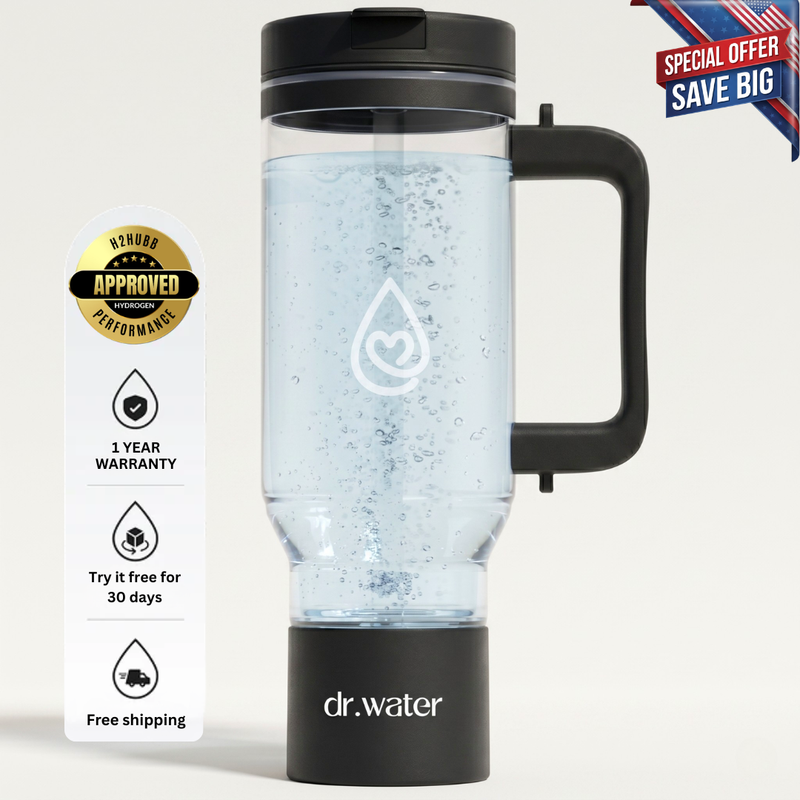
The Hydrator Max is built around a certified SPE/PEM membrane with a platinum-plated electrode and waste-gas vent, delivering up to 10,000 PPB peak dissolved hydrogen measured on-device. It's a purpose-built PEM system, not an open-chamber ionizer rebranded for hydrogen water.
Remember that distinction the next time you see "hydrogen water" and "ionizer" used interchangeably in a product listing. They're related technologies with genuinely different internal architecture.
FAQ
What's the main difference between a PEM system and a standard ionizer?
A PEM adds a physical membrane that separates the anode and cathode reactions. A standard open-chamber ionizer has no such barrier, so both reactions share the same water.
Are all hydrogen water devices PEM-based?
No. Some products use open-chamber electrolysis without a true membrane. It's worth asking directly what separates the two electrode reactions in any device you're considering.
Why did it take so long for PEM tech to reach consumer bottles?
PEM membranes have existed in industrial and fuel cell applications since the 1960s and 70s. Miniaturizing that into a portable, battery-powered bottle is a more recent engineering development.
Does the Hydrator Max use PEM technology?
Yes. It uses a certified SPE/PEM membrane, a platinum-plated electrode, and a waste-gas vent, delivering up to 10,000 PPB peak dissolved hydrogen measured on-device, backed by a 30-day risk-free trial if you want to test it on your own water first.
If you want a bottle built around this thinking, the Hydrator Max ships with a certified SPE/PEM membrane, a platinum-plated electrode, and a waste-gas vent, backed by a 30-day risk-free trial. Check it out here.