TLDR
No, molecular hydrogen research is not a fringe theory someone dreamed up for a marketing page. Since Ohsawa's 2007 paper in Nature Medicine, researchers have published more than 1,600 studies on molecular hydrogen, ranging from cell cultures to randomized human trials. The placebo argument does not hold up once you look at the controlled studies.

Where the scam accusation comes from
I get this one in my inbox weekly, usually phrased bluntly: "isn't this just expensive placebo water?" It's a fair question. The wellness space is full of products that sell a feeling instead of a mechanism, and hydrogen water got lumped in with alkaline machines and magnet bracelets by association, not by evidence.
The honest answer is that some hydrogen products on the market probably are placebo, because they don't actually generate meaningful hydrogen concentrations. That's a real problem. But it's a problem with specific weak products, not with the molecule itself.
A cheap bottle that dissolves 200 ppb of hydrogen and a device that hits 10,000 ppb are not the same product wearing different packaging.
What the actual research says
Since Ohsawa's original paper on hydrogen as a therapeutic antioxidant, research groups in Japan, the US, and Europe have run trials looking at oxidative stress markers, exercise recovery, and metabolic markers after hydrogen water intake. Several are randomized, placebo-controlled, and published in peer-reviewed journals.
| Study focus | Design | What it measured |
|---|---|---|
| Ohsawa et al., 2007, Nature Medicine | Animal + cell model | H2 as a selective antioxidant against reactive oxygen species |
| LeBaron et al., 2019, J Lipid Res | Randomized, controlled human trial | Lipid and metabolic markers over 8 weeks |
| Ostojic, various 2018-2021 | Human athletic performance studies | Recovery markers and perceived exertion |
None of this proves hydrogen water is a miracle. It proves the mechanism is real and measurable in a lab, which is a different claim than "it does nothing."
Can placebo explain the results
Placebo is powerful, but it doesn't explain lab measurements like serum oxidative stress markers or lipid panels in a blinded trial. A participant's belief about a bottle of water doesn't change their triglycerides.
That's the detail skeptics usually skip. Subjective symptom scores can be influenced by expectation. Blood chemistry generally isn't.
Where the real scam risk actually is
The scam risk in this category isn't the science, it's the marketing math. A lot of products lean on vague claims like "studies show hydrogen water works" without naming a single study, dose, or outcome.
- Vague citations with no journal, year, or dose named
- PPB numbers that are never independently measured on the actual device
- Health claims that go beyond what any published trial actually tested
I'd rather point you to the actual papers and let you judge the dose than ask you to trust a testimonial.
A PPB number with no measurement method behind it is a marketing claim, not a spec.
How to evaluate any hydrogen product yourself
You don't need a chemistry degree to sort real products from noise. A few questions do most of the work.
- What is the peak dissolved hydrogen in PPB, and is it measured on the device or just claimed?
- Does the maker cite specific studies, or just "research shows"?
- Is there a return window long enough to actually test it on your own water?
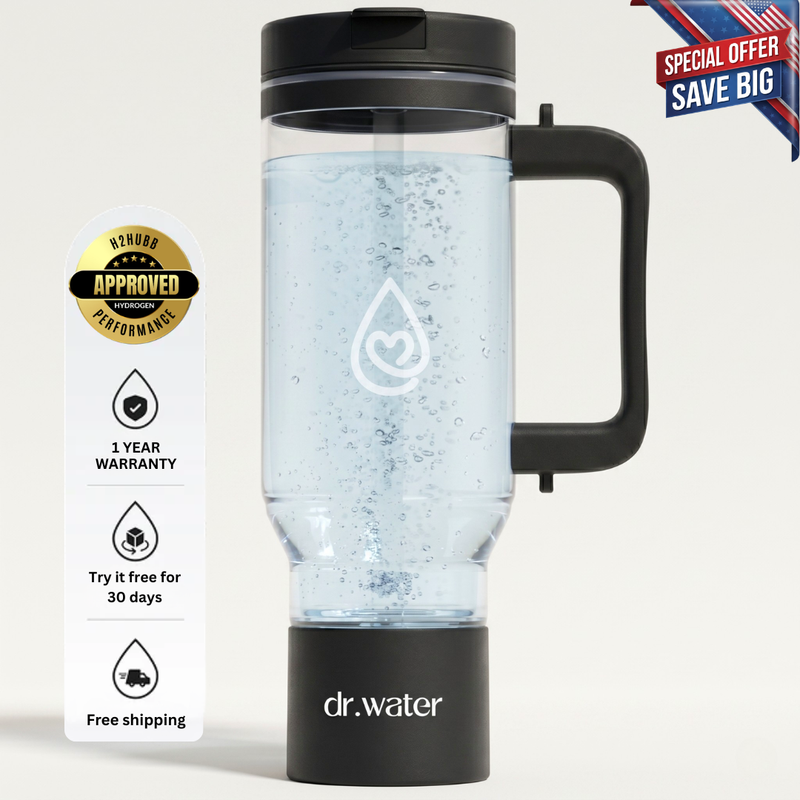
Our Hydrator Max measures 10,000 PPB peak dissolved hydrogen on the device itself, using SPE/PEM electrolysis with a platinum-plated electrode. We back it with a 30-day risk-free trial because I'd rather you test it than take my word for it.
FAQ
Is hydrogen water backed by any real science, or is it all marketing?
There is real peer-reviewed research going back to a 2007 Nature Medicine paper, including randomized human trials measuring blood markers, not just subjective feelings. The science on the molecule is legitimate, though individual products vary widely in actual dose.
Could the benefits people report just be placebo?
Placebo can influence how someone rates their own energy or mood, but it doesn't move lab-measured markers like oxidative stress panels in blinded, controlled trials. Those results are harder to explain with belief alone.
Why do some people call hydrogen water a scam then?
Usually because they encountered a low-dose product making claims the research doesn't support, or a bottle with no verified PPB output at all. That is a real problem with weak products, not with the underlying research.
How do I know a hydrogen bottle's PPB claim is real?
Ask if it is measured on the device with a dissolved hydrogen meter, and at what point in the cycle. A number with no measurement method behind it is just a marketing claim.
If you want to see this engineering for yourself, the Hydrator Max comes with a 30-day risk-free trial. Run it on your own water for a month, and if it is not for you, send it back.
⚕️ Clinicians' Choice
2,033 clinicians share Dr. Water on VerifiedMD without compensation.