TLDR
A bottle of hydrogen water cannot explode. Hydrogen only ignites when it makes up roughly 4% or more of the surrounding air, mixed with an ignition source. A bottle producing a few milligrams of gas, most of it dissolved in water and the rest vented immediately, never gets remotely close to that threshold.

The fear, and where it comes from
People hear "hydrogen" and think of the Hindenburg, or a chemistry class warning about hydrogen gas being flammable. Both associations are accurate about hydrogen gas in general. Neither applies to what happens inside a hydrogen water bottle.
I understand the instinct. Hydrogen is genuinely flammable in the right conditions, so it's reasonable to ask whether a device generating it at your kitchen counter is safe. It's a good question, and it has a clear chemistry answer.
The actual chemistry of when hydrogen ignites
Hydrogen doesn't ignite just because it exists. It needs three things at once: hydrogen gas concentrated in air, oxygen, and an ignition source, all in the right ratio.
| Condition | Requirement |
|---|---|
| Lower explosive limit (LEL) | About 4% hydrogen by volume in air |
| Upper explosive limit (UEL) | About 75% hydrogen by volume in air |
| Ignition source | Spark, flame, or sufficient heat present at the same time |
Below 4% hydrogen in the surrounding air, there's nothing to ignite even if you held a flame right up to it.
Why a water bottle can't reach that point
Electrolysis in a hydrogen water bottle produces hydrogen in tiny quantities, on the order of milligrams per cycle, most of which dissolves directly into the water instead of collecting as free gas.
The small amount of gas that doesn't dissolve gets vented immediately into open room air, not sealed inside the bottle. Open air disperses it well below the 4% concentration threshold within seconds, long before there's any spark nearby to worry about.
To hit an explosive concentration you'd need a sealed space, a continuous hydrogen source, and no ventilation, roughly the setup of an industrial hydrogen storage tank, not a countertop bottle running a two-minute cycle with an open vent.
What the waste-gas vent is actually for
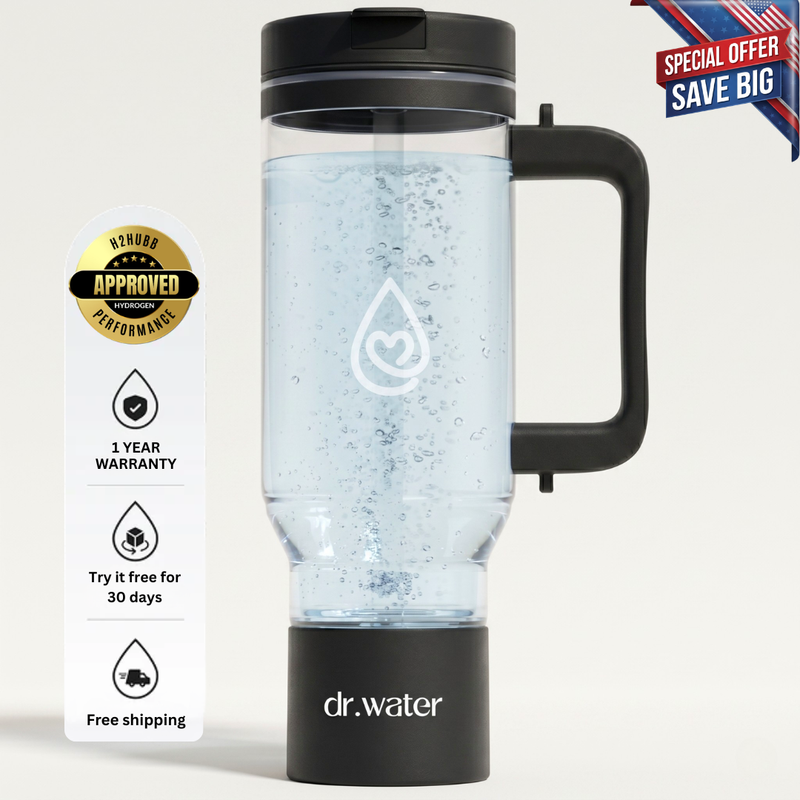
The Hydrator Max uses SPE/PEM electrolysis with a platinum-plated electrode, and the design includes a dedicated waste-gas vent. Its primary job isn't explosion prevention, it's keeping byproduct gases like chlorine and ozone out of your water instead of letting them dissolve alongside the hydrogen.
As a side effect, that same vent means hydrogen gas never builds up inside a sealed chamber in the first place. It's expelled the moment it's generated, not trapped.
- Hydrogen gas: mostly dissolved, remainder vented into open air immediately
- Chlorine and ozone byproducts: vented, not left to dissolve into your water
- Sealed buildup: none, the chamber never holds free gas under pressure between cycles
I get asked if running several cycles back to back changes any of this. It doesn't in any meaningful way, since each cycle still vents into open air on its own, and the milligram quantities involved stay far below the 4% threshold even added together over a full day of use.
It's expelled the moment it's generated, not trapped.
FAQ
Can a hydrogen water bottle explode while charging or running a cycle?
No. The hydrogen produced is either dissolved into the water or vented into open air immediately, so it never accumulates to the roughly 4% concentration in air that hydrogen needs to ignite.
Is it dangerous to drink water with hydrogen gas dissolved in it?
No. Dissolved hydrogen gas in water behaves completely differently from free hydrogen gas in air. There's no ignition risk from drinking it, and molecular hydrogen has GRAS status as a food additive.
Why do some people think hydrogen bottles are unsafe?
Usually from confusing "flammable" with "dangerous at any quantity." Hydrogen is flammable in the right concentration, the same way flour dust or sugar dust can be, but the milligram quantities in a water bottle never get close to that threshold.
What does the waste-gas vent actually do?
It expels byproduct gases like chlorine and ozone from the electrolysis process into open air instead of letting them dissolve into your water, and it prevents any gas buildup in a sealed space.
If you want to see this engineering for yourself, the Hydrator Max comes with a 30-day risk-free trial. Run it on your own water for a month, and if it is not for you, send it back.
⚕️ Clinicians' Choice
2,033 clinicians share Dr. Water on VerifiedMD without compensation.