TLDR
I get asked what dose the anti-aging research actually used, and the honest answer is that it clusters higher than most bottles can produce. Early studies on molecular hydrogen and cellular aging markers have generally used dissolved hydrogen concentrations that low-output bottles simply cannot reach. This is educational, not medical advice, and no product reverses aging.

Why cellular longevity research points to dose
Across early molecular hydrogen research, outcomes appear to depend partly on concentration, beyond simply whether hydrogen was present at all. That is one reason concentration shows up so often as a variable researchers report. I hear this question a lot from customers who assume any hydrogen water works the same way.
None of this means a specific product reverses aging or extends lifespan. Dose is one of the variables that keeps coming up when researchers design these studies, and that is worth understanding if you are comparing products. It changes how you should shop, even if it does not change what anyone can promise about outcomes.
No product reverses aging.
How mitochondrial stress ties to aging
Mitochondria, the energy-producing structures in your cells, generate reactive oxygen species as a normal byproduct of energy production. Over time, an imbalance between these reactive molecules and the body's ability to neutralize them is one of several processes researchers associate with cellular aging.
Molecular hydrogen is thought to act as a selective antioxidant, meaning early research suggests it may interact with some reactive oxygen species without disrupting normal cellular signaling. This remains an active area of study, not a settled conclusion.
Matching concentration to study ranges
| Category | Dissolved H2 range | Reachable with |
|---|---|---|
| Low-output bottles and tablets | 0.5 to 1.6 ppm | Open-air electrolysis or effervescent tablets |
| Higher-concentration protocols referenced in newer research | 1.6 to 10 ppm | Sealed, pressurized electrolysis |
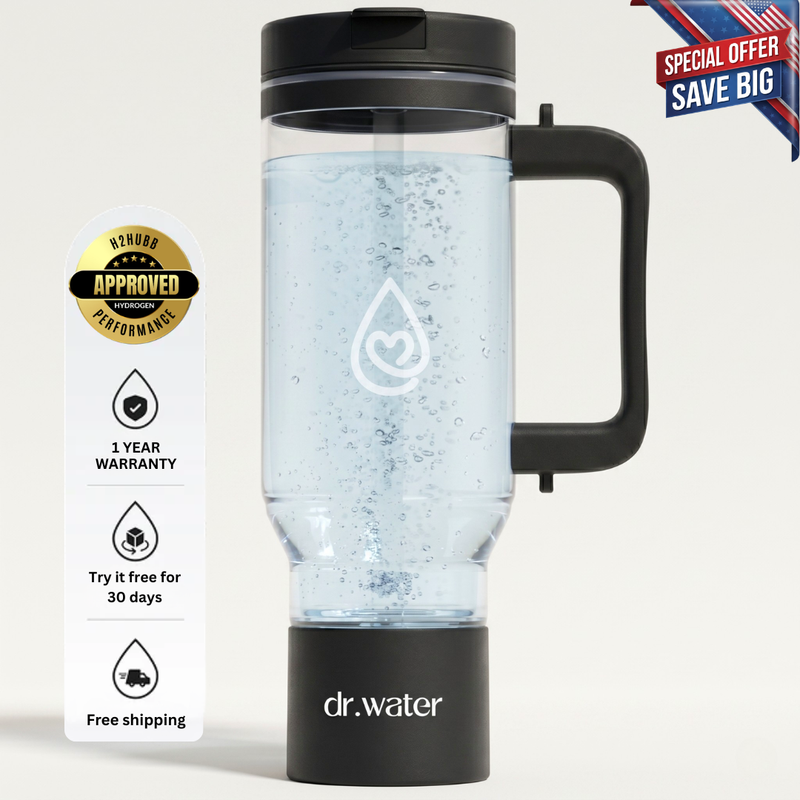
| Hydrator Max peak output | 10 ppm (10,000 ppb) | SPE/PEM electrolysis, pressurized borosilicate chamber, measured on-device |
If a low-output bottle cannot reach the concentrations referenced in higher-dose study designs, it is not really testing the same thing those studies looked at, regardless of what the packaging implies.
If a low-output bottle cannot reach the concentrations referenced in a higher-dose study design, it is not really testing the same thing that study looked at.
Why consistency matters more than a peak number
Aging-related research, like most of the hydrogen water literature, tends to track outcomes over weeks or months rather than looking for an immediate change.
- Daily intake sustained over time shows up more often in study designs than occasional use
- Fresh servings preserve more dissolved hydrogen than water that has been sitting
- A routine you can actually maintain matters more than chasing a perfect single dose
What to look for in a device
If concentration is the variable that matters most in this research area, it is worth being specific about what to check before buying anything marketed around healthy aging.
- An on-device ppb or ppm readout instead of a printed claim
- SPE/PEM electrolysis with a platinum-plated electrode and waste-gas venting
- A sealed, pressurized chamber capable of exceeding the roughly 1.6 ppm open-air ceiling
- Materials built for daily use, since consistency matters more than a single strong batch
FAQ
Does high-dose hydrogen water reverse aging?
No. It does not reverse aging or treat any condition. Early research has looked at molecular hydrogen and oxidative stress markers, which is a research area, not a proven anti-aging treatment.
What concentration do longevity-related studies typically reference?
Ranges vary, but higher-concentration protocols in newer research generally go beyond what open-air electrolysis can produce, which tops out around 1.6 ppm.
Is it safe to drink high-concentration hydrogen water daily?
This is educational information, not medical advice. Talk to your doctor about your specific health goals before adding anything new to your daily routine.
How does the Hydrator Max reach 10,000 ppb?
It uses SPE/PEM electrolysis with a platinum-plated electrode inside a pressurized borosilicate glass chamber, running consecutive cycles and measuring the peak on-device.
If you want water that matches the higher end of what current research references, the Hydrator Max ships with a 30-day risk-free trial.
⚕️ Clinicians' Choice
2,033 clinicians share Dr. Water on VerifiedMD without compensation.