TLDR
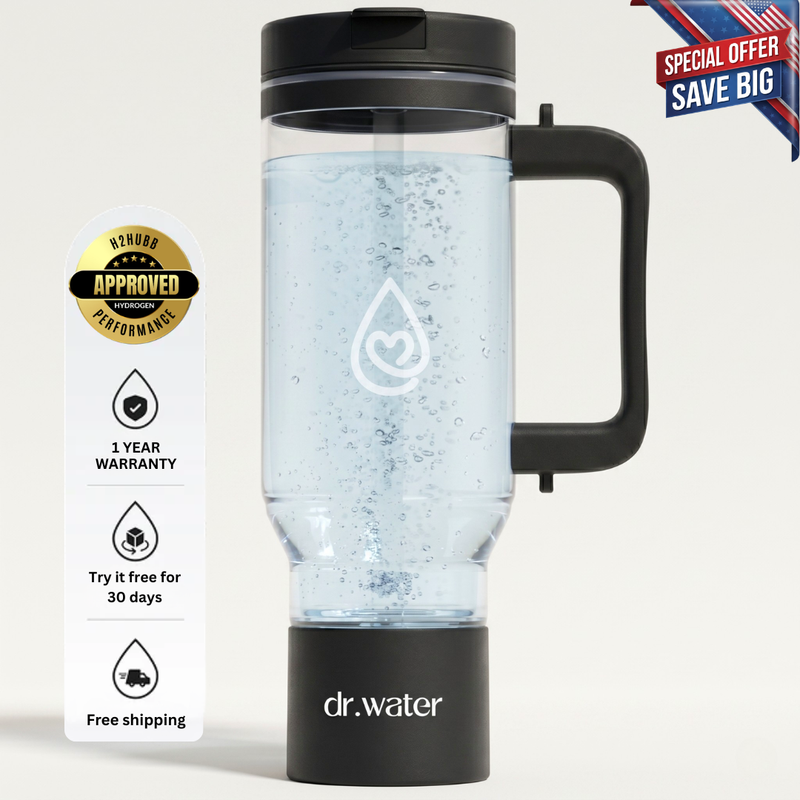
If you're seeing "discontinued" next to the Echo Go Plus in your search results, or you just can't find it in stock anywhere, don't panic and don't overpay a reseller for old stock. Check what actually mattered to you about the bottle (dose, venting, battery life) and shop those specs directly. The Hydrator Max hits 10,000 PPB with a vented SPE/PEM cell and a 30-day risk-free trial, which covers most reasons people liked that bottle in the first place.

Why you're seeing "discontinued" searches
I see this pattern a lot. Someone's bottle is out of stock at their usual retailer, or a listing disappears, and the internet fills in the blank with "discontinued." Sometimes that's accurate. A lot of the time it's just a stock gap or a page that got pulled.
Either way, the practical question is the same: your bottle isn't available right now and you need water. I'm not going to tell you what's true about someone else's supply chain. I'll tell you how to pick a replacement without repeating whatever frustrated you the first time.
What actually mattered about that bottle
People don't get attached to a bottle brand. They get attached to a routine: fill it, press a button, drink hydrogen water in a few minutes. When that routine breaks, the instinct is to find the exact same product again.
I'd push back on that instinct a little. Instead of hunting for one specific SKU, write down the two or three things you actually cared about:
- How strong the water tasted or felt (this maps to dissolved H2 concentration, usually listed in ppb or ppm)
- How long it lasted between charges
- Whether it smelled like anything odd during a cycle
- How easy it was to clean
Those four things will do more to guide a good replacement purchase than the brand name on the box.
You don't need the exact same bottle back. You need the same specs: measured dose, a vent, and a battery that lasts.
What to check before you buy anything
Any replacement bottle should answer these questions before you hand over a card number.
Is the dose actually measured?
Ask for the ppb number and whether it's measured on the actual device, instead of quoted from a lab test on a different unit. The Hydrator Max is rated at 10,000 PPB peak dissolved H2, measured on-device.
Does it vent waste gas?
Electrolysis produces more than hydrogen. A generator that doesn't vent chlorine and ozone gas is pushing that into your water along with the H2 you actually want. Ours uses an SPE/PEM membrane with a platinum-plated electrode and a dedicated waste-gas vent, so the byproducts get expelled instead of dissolved.
How the specs actually compare
| What to check | Hydrator Max | Typical unvented bottle |
|---|---|---|
| Peak dissolved H2 | 10,000 PPB, measured on-device | Often unmeasured or lab-only claim |
| Membrane / venting | SPE/PEM, waste-gas vent | Often none stated |
| Battery | 4500 mAh, 30+ cycles per charge | Varies, rarely disclosed |
| Materials | Makrolon body, borosilicate glass chamber | Varies by model |
| Return window | 30-day risk-free trial | Varies by seller |
Switching without losing your routine
Switching hydrogen bottles is not a big lift. You're not changing your water source or daily habit, just the device that makes the gas.
- Use RO, distilled, or filtered water. Do not run additives or powders through an electrolysis cycle; mix those in after.
- Run one cycle to get familiar with the timing and taste before you judge it against your old bottle.
- Use the 60-second UV self-clean cap between uses so you're not troubleshooting a smell that's actually just a dirty cap.
We've shipped over 12,000 of these bottles and our support team is based in the USA, so if something feels off in week one, you're talking to a person, not a ticket queue.
FAQ
Is the Echo Go Plus actually discontinued?
We don't track other brands' inventory or business decisions, so we can't confirm that. What we can tell you is how to evaluate any replacement bottle, including checking dose, venting, and warranty support, which is what this guide covers.
What's the closest match to a compact hydrogen bottle in dose and features?
Look for a device with a measured ppb rating, a vented SPE/PEM cell, and a documented battery cycle count. The Hydrator Max covers all three at 10,000 PPB, vented electrolysis, and 30+ cycles per charge.
Can I use tap water in a replacement bottle?
Most hydrogen generators, ours included, work best with RO, distilled, or filtered water. Minerals and additives should be mixed in after the electrolysis cycle, not during it.
What if the replacement doesn't work for me?
Try the Hydrator Max for 30 days. If it's not right for you, send it back. That's what the risk-free trial is for.
Ready to stop chasing sold-out listings? Try the Hydrator Max with our 30-day risk-free trial and see if it fits your routine better than the last one did.