TLDR
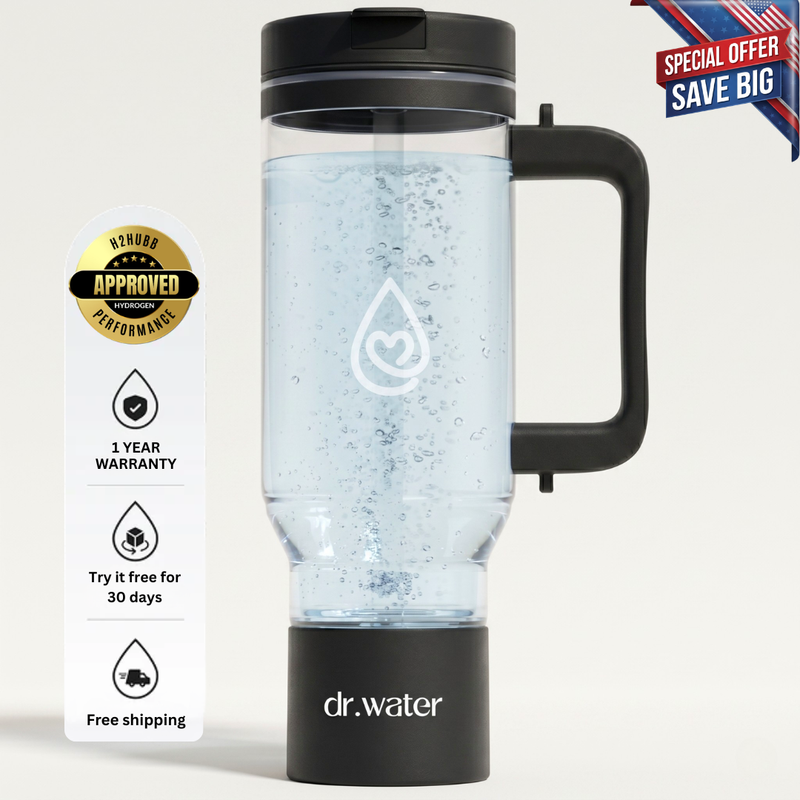
The Hydrator Max uses a platinum-plated electrode inside a certified SPE/PEM membrane system, reaching 10,000 PPB (10 ppm) peak dissolved hydrogen, measured on-device. Plate thickness itself is not something you can verify by eye on any bottle, ours or H2 Life's, so judge by the output number and the warranty behind it instead.

Plate thickness is hard to verify by eye
Electrode plate thickness gets thrown around as a spec, but no brand, us included, hands you a micrometer at checkout. What you can actually check is the output it produces and how that output holds up over months of use.
A thicker plate generally has more surface area to work with over time, which is the theory behind why it gets mentioned at all. But theory is not the same as a verified number, and a thin plate paired with a well-designed membrane can still outperform a thick one paired with a poor seal.
A thicker plate claim with no output number to back it up tells you very little.
Our electrode setup
Here is what we publish about the electrolysis system inside the Hydrator Max. Use it as your checklist when you go looking for the same details on H2 Life's listing.
| Spec | Hydrator Max | H2 Life |
|---|---|---|
| Electrode material | Platinum-plated | Korean platinum-coated proton membrane claimed; base metal not specified (their site, Aug 2026) |
| Membrane type | Certified SPE/PEM | Platinum-coated proton exchange membrane claimed (their site, Aug 2026) |
| Peak dissolved H2 | 10,000 PPB (10 ppm), on-device | Up to 3,700 ppb claimed within 9 minutes; other H2 Life SKUs list 3,000-5,000 ppb (their site, Aug 2026) |
| Waste-gas handling | Vented | Not published (as of Aug 2026) |
Competitor figures are what H2 Life publishes on h2lifetech.com, retrieved August 2026. Specs change; their page is the source of truth.
How to spot a thin or failing electrode
This is where plate thickness actually shows up in daily life, not on a spec sheet but in how the bottle performs after months of regular use.
- Peak reading drops noticeably over a few months of normal use
- A cycle takes visibly longer to reach the same reading it used to
- Any unusual smell during a cycle, which can point to a venting or membrane issue
- Visible pitting or flaking if the electrode is accessible for inspection
None of these on their own means a bottle is failing. But two or more together, especially a dropping reading paired with a longer cycle time, is worth reaching out to support about.
What replacement actually costs long term
Nobody advertises the day their electrode starts to wear down, but it is a normal part of owning any electrolysis device long term, and it is worth planning for before you buy rather than after.
Electrodes wear with use, that is true of any electrolysis bottle. What matters is whether the brand backs the unit with a real warranty and support you can actually reach if output drops.
We are USA-based with more than 12,000 bottles shipped and a 30-day risk-free trial on every order. Ask H2 Life, or any brand, the same question: what happens if output drops before the warranty period is up, and what the replacement or repair process actually looks like.
A brand that answers that question clearly, before you buy, is telling you something about how it plans to treat you after the sale.
FAQ
How thick is the Hydrator Max's electrode plating?
We can confirm the electrode is platinum-plated within a certified SPE/PEM system. For an exact thickness spec, plate thickness is difficult to verify independently on any bottle, so we focus on the measured output instead, which is the number that actually reaches your glass.
Will the Hydrator Max's output drop over time?
Like any electrolysis device, output can shift with heavy use over months and years. That is why we back every unit with a 30-day risk-free trial and USA-based support you can reach if something changes.
Does H2 Life publish their plate thickness?
No. Plate thickness is not published on their site as of Aug 2026 (they do state a Korean platinum-coated proton exchange membrane with multiple coating layers). If a brand does publish a plate-thickness number, ask the same follow-up question you would ask any brand: how was it measured, and how does output hold up after regular use.
What water should I use in the Hydrator Max?
RO, distilled, or filtered water. Do not electrolyze water with added salts or powders, mix those in after the cycle finishes.
Want to see the platinum-plated electrode setup for yourself? Try the Hydrator Max for 30 days, risk-free.
⚕️ Clinicians' Choice
2,033 clinicians share Dr. Water on VerifiedMD without compensation.