TLDR
Hydrogen tablets work by dropping a chemical reaction into your glass, which means you're buying a new dose every single day, forever. A bottle with an SPE/PEM electrolysis cell makes hydrogen on demand from plain water, no recurring purchase, no ingredient list to track. Over a year, that math tends to favor the bottle.

How tablets actually work
Most hydrogen tablets use a magnesium-based reaction that releases hydrogen gas when dropped into water. It's a clever bit of chemistry, and it's genuinely portable, which is why people like them for travel.
The tradeoff is you're buying a consumable every time you want a dose. There's no upfront device cost, but there's also no end to the recurring spend, and the exact reaction byproducts vary by brand and formulation.
The recurring cost problem
Do the math on your own habit for a second. If you're using one or two tablets a day, that's 30 to 60 tablets a month, every month, indefinitely.
One or two tablets a day is 30 to 60 tablets a month, every month, indefinitely.
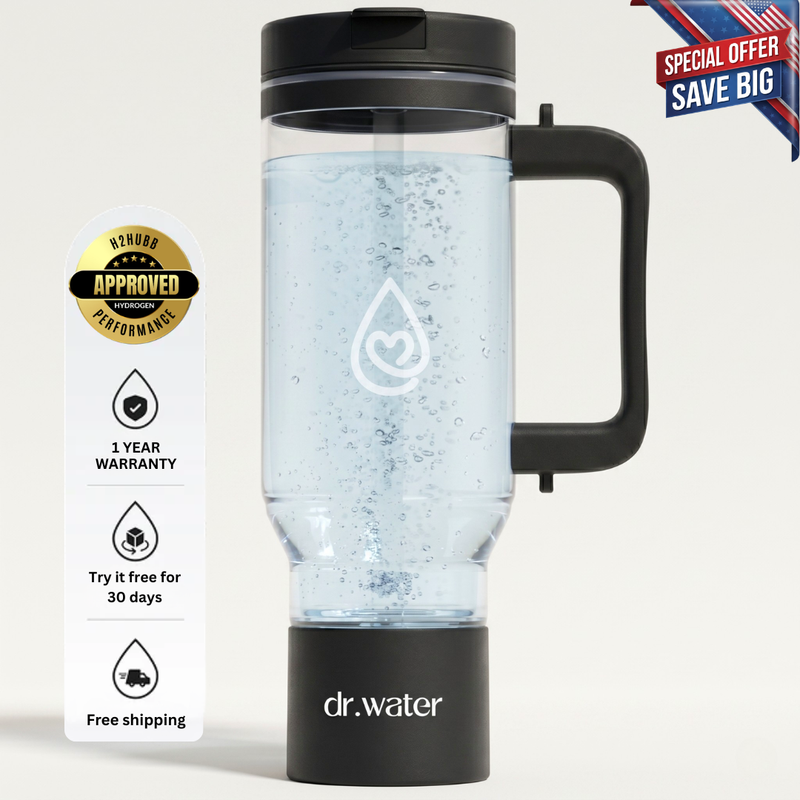
A bottle with a built-in electrolysis cell flips that model. You pay once for the device, and then the ongoing cost is just water, which most people are already buying or filtering anyway.
What a year of tablets costs against one bottle
| Tablets (1-2/day) | Hydrator Max | |
|---|---|---|
| Upfront cost | $0 (no device) | $299 RRP |
| Ongoing cost | Recurring, indefinitely | None beyond water |
| Dose measurement | Varies by brand and batch | 10,000 PPB, measured on-device |
| Byproducts | Varies by formulation | Vented via SPE/PEM, not dissolved |
| Portability | High | Portable, rechargeable, 30+ cycles per charge |
What an SPE/PEM bottle does instead
Instead of a chemical reaction from a tablet, an SPE/PEM bottle runs an electrical current through water using a solid polymer or proton exchange membrane, splitting it into hydrogen and oxygen directly.
No ingredient list to check
There's no tablet formulation to read, because there's no tablet. You control the water source (we recommend RO, distilled, or filtered), and the device does the rest.
Byproduct gas gets vented, not dissolved
The Hydrator Max routes chlorine and ozone byproducts out through a dedicated vent using a platinum-plated electrode, rather than leaving them in the water you drink.
Making the switch
If you're moving from tablets to a bottle, here's what changes in your routine:
- Fill with RO, distilled, or filtered water instead of dropping in a tablet.
- Run one full cycle, roughly the time it'd take a tablet to fully dissolve, to reach peak dose.
- Recharge the battery periodically. At 4500 mAh, you're getting 30+ cycles per charge before needing a top-up.
Try it for 30 days, risk-free. If the switch from tablets doesn't work for your routine, send it back.
One habit worth keeping from your tablet days: paying attention to your water source. Tablets are typically dropped into whatever water is on hand, but an electrolysis bottle does best with RO, distilled, or filtered water. If scale builds up over time, a citric acid descale keeps the chamber running clean.
FAQ
Are hydrogen tablets and an electrolysis bottle equally effective?
Both can produce dissolved hydrogen water. Tablets rely on a chemical reaction with variable formulation by brand; a bottle like ours uses electrolysis with a measured, on-device dose of 10,000 PPB.
Do I need to keep buying anything after I get a hydrogen bottle?
No. Once you have the device, the ongoing input is just water. We recommend RO, distilled, or filtered water for the electrolysis cycle itself.
Is switching from tablets to a bottle a big change in routine?
Not really. You fill the chamber instead of dropping in a tablet, run a cycle, and drink. Total time is similar to waiting for a tablet to dissolve.
What happens to the byproduct gas in an electrolysis bottle?
In the Hydrator Max, an SPE/PEM membrane with a platinum-plated electrode routes byproduct gas like chlorine and ozone out through a dedicated vent, rather than leaving it in the water.
Ready to stop restocking tablets? Try the Hydrator Max, risk-free for 30 days.