TLDR
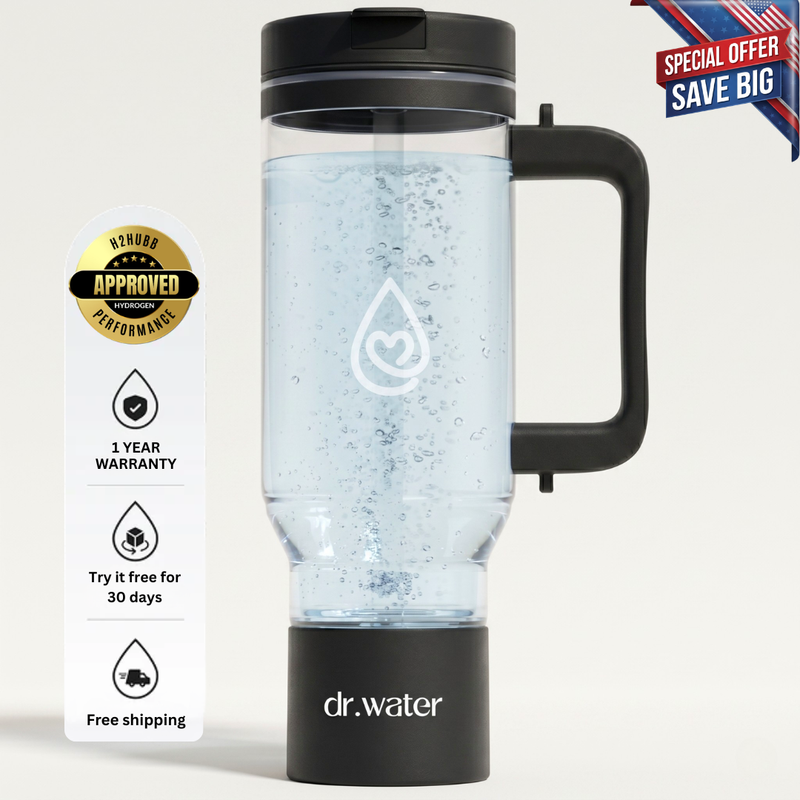
You can carry a hydrogen water bottle through TSA. Empty the chamber before security, keep it in carry-on rather than checked, and know that its 4500 mAh battery sits well under the 100 Wh limit that needs no special approval.

Can you actually bring one on a plane
Yes. A hydrogen water bottle is not a liquid at security since it travels empty, and it is not a restricted electronic since the battery sits well under the lithium-ion limits TSA screens for. I fly with mine several times a year and have never had it pulled aside.
The two things that actually matter are how you carry the battery and whether the bottle is empty when you walk through the scanner.
Battery watt-hour rules
TSA allows lithium-ion batteries in carry-on without a permit up to 100 watt-hours. The Hydrator Max runs a 4500 mAh battery, which sits far below that threshold, so it does not need documentation or a separate declaration at the checkpoint.
TSA allows lithium-ion batteries in carry-on without a permit up to 100 watt-hours.
| Battery size | TSA carry-on rule |
|---|---|
| Under 100 Wh (Hydrator Max range) | Allowed, no limit on quantity for personal use |
| 100-160 Wh | Allowed with airline approval, usually 2 max |
| Over 160 Wh | Not allowed in carry-on or checked |
Carry-on versus checked luggage
Carry-on is the better call. TSA and most airlines actually prefer lithium batteries in the cabin rather than the cargo hold, since a fire is easier to manage where a crew can see it.
- Carry-on: keep it in your bag as-is, empty chamber, no special packing needed.
- Checked: technically allowed under the same Wh limit, but not recommended, since checked bags see more handling and temperature swings.
International flights and other checkpoints
Most countries follow the same ICAO battery guidelines TSA uses, so the same rule of thumb applies almost everywhere: empty chamber, battery under 100 Wh, carry-on preferred. A few countries with stricter electronics screening (some Gulf state airports, for example) may ask an agent to power it on briefly, which the Hydrator Max does without needing water in the chamber.
Pre-flight checklist
- Empty the chamber completely before you pack.
- Charge it to roughly 30-50% rather than full, standard advice for any lithium battery in transit.
- Keep it accessible in case a screener wants to look at it directly.
- Bring the charging cable in the same bag so a screener can verify it powers on if asked.
I travel with mine in my backpack's outer pocket rather than buried at the bottom. It has never added meaningful time to my security line, and having it within easy reach means one less thing to dig for if an agent has a question.

FAQ
Will TSA make me throw out water in my hydrogen bottle?
Yes, any liquid over 3.4 oz gets tossed at the checkpoint regardless of what generated it. Empty the chamber before you get to security and refill on the other side.
Does the bottle need to be declared as a battery device?
No formal declaration is needed for batteries under 100 Wh, which covers the Hydrator Max. Just be ready to answer questions if a screener asks what it is.
Can I bring it through security fully assembled?
Yes, there is no need to disassemble it. Treat it like any other small electronic device, empty the water chamber, and place it in your bag or bin as instructed.
What if airport security has never seen one before?
It happens occasionally since the device is still fairly new to most screeners. A quick explanation that it is a battery-powered water bottle with no restricted contents usually clears it up in under a minute.
If you travel enough that battery questions at the gate have gotten old, the Hydrator Max ships with a 30-day risk-free trial, plenty of time to take it on a trip and see how it holds up. Take a look here.