You may have come across ionized water or alkaline water while searching for healthier hydration options. With so many water types promoted as “better,” figuring out what ionized water truly offers can feel confusing. Claims about pH, minerals, antioxidants, and wellness benefits often overlap, making it hard to know what actually matters.
This guide breaks everything down in a simple, practical way. You’ll learn how ionized water is made, what its benefits look like in real life, where the science stands, and how it differs from hydrogen water, a newer option backed by growing research.
Key Takeaway
|
What Is Ionized Water?
Ionized water is water that has been altered to become more alkaline, giving it a higher pH and a more antioxidant-friendly structure. People often drink ionized (alkaline) water because it tastes smoother and feels gentler on the stomach.
To understand this better, it helps to look at pH. A pH above 7 is alkaline, and a pH below 7 is acidic. The higher the number, the more alkaline it is; the lower the number, the stronger the acidity.
For reference, our blood stays slightly alkaline with a narrow range of 7.35 to 7.45. Stomach fluid is extremely acidic at around 1.5 to 3.5, helping break down food. Most tap water usually falls between 6.5 and 8.5, averaging near 7.5. Regular bottled water stays close to neutral at pH 7, while bottled alkaline water typically ranges from pH 8 to 9.
With that context, ionized water is known for:
- Higher pH levels than standard drinking water.
- Lower oxidation-reduction potential (ORP), which may support antioxidant activity.
- Mineral-based alkalinity, mainly from magnesium, calcium, and potassium.
Benefits of Ionized Water
Many people drink ionized alkaline water for its smoother taste, gentler feel, and potential wellness benefits. A few studies have shown positive effects, although conclusive clinical trials are still limited and more research is needed to confirm long-term outcomes.
One observational study found that postmenopausal women who regularly consumed alkaline water had lower metabolic risk markers such as fasting plasma glucose, TG/HDL ratio, diastolic blood pressure, and waist circumference. They also recorded longer sleep duration and stronger handgrip strength.
Another study reported that alkaline water intake may support improvements in bone density in postmenopausal individuals with osteoporosis.
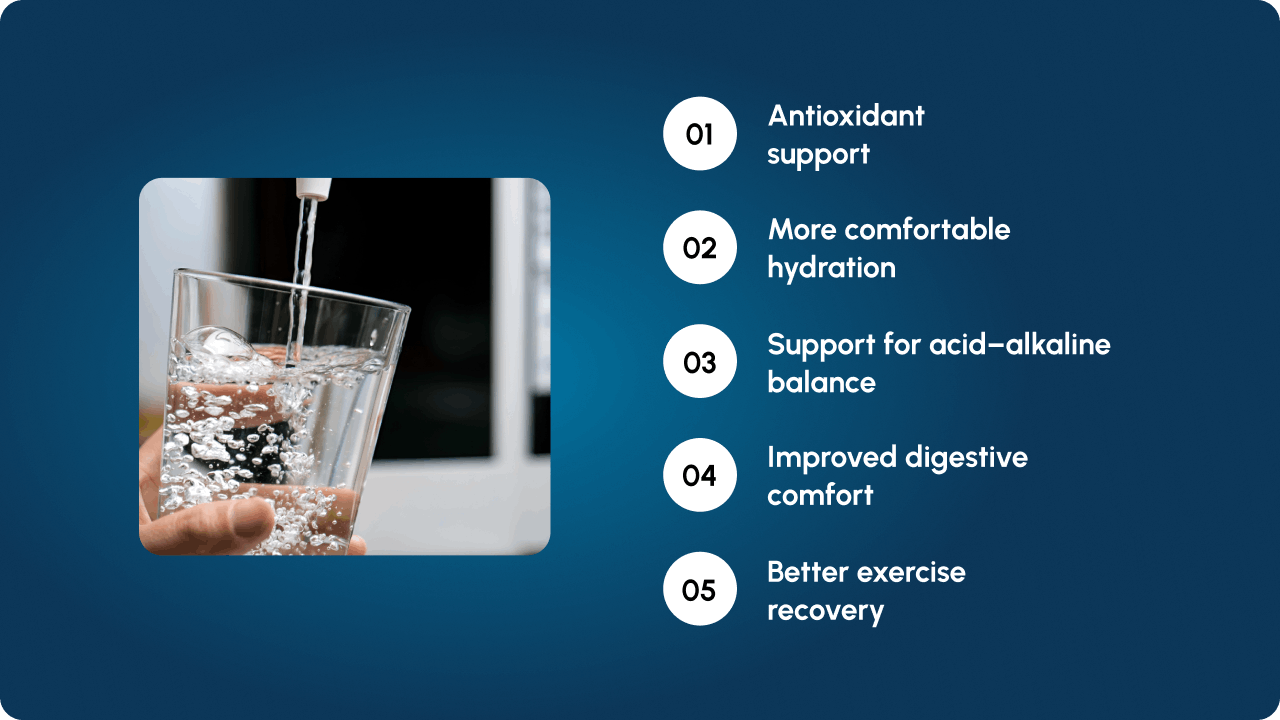
These early findings point toward possible benefits, which include:
- Antioxidant support through lower ORP levels.
- More comfortable hydration, often reported as easier to drink.
- Support for acid–alkaline balance, especially for high-acid diets.
- Improved digestive comfort, particularly in people with acid reflux tendencies.
- Better exercise recovery, as alkaline water may help reduce blood viscosity after intense activity.
Ionized Water vs. Hydrogen Water: Key Differences
Many people confuse alkaline ionized water with hydrogen-rich water, yet both are created differently and offer distinct benefits. The difference comes down to molecular activity, how the water is produced, and what each type actually does inside the body.
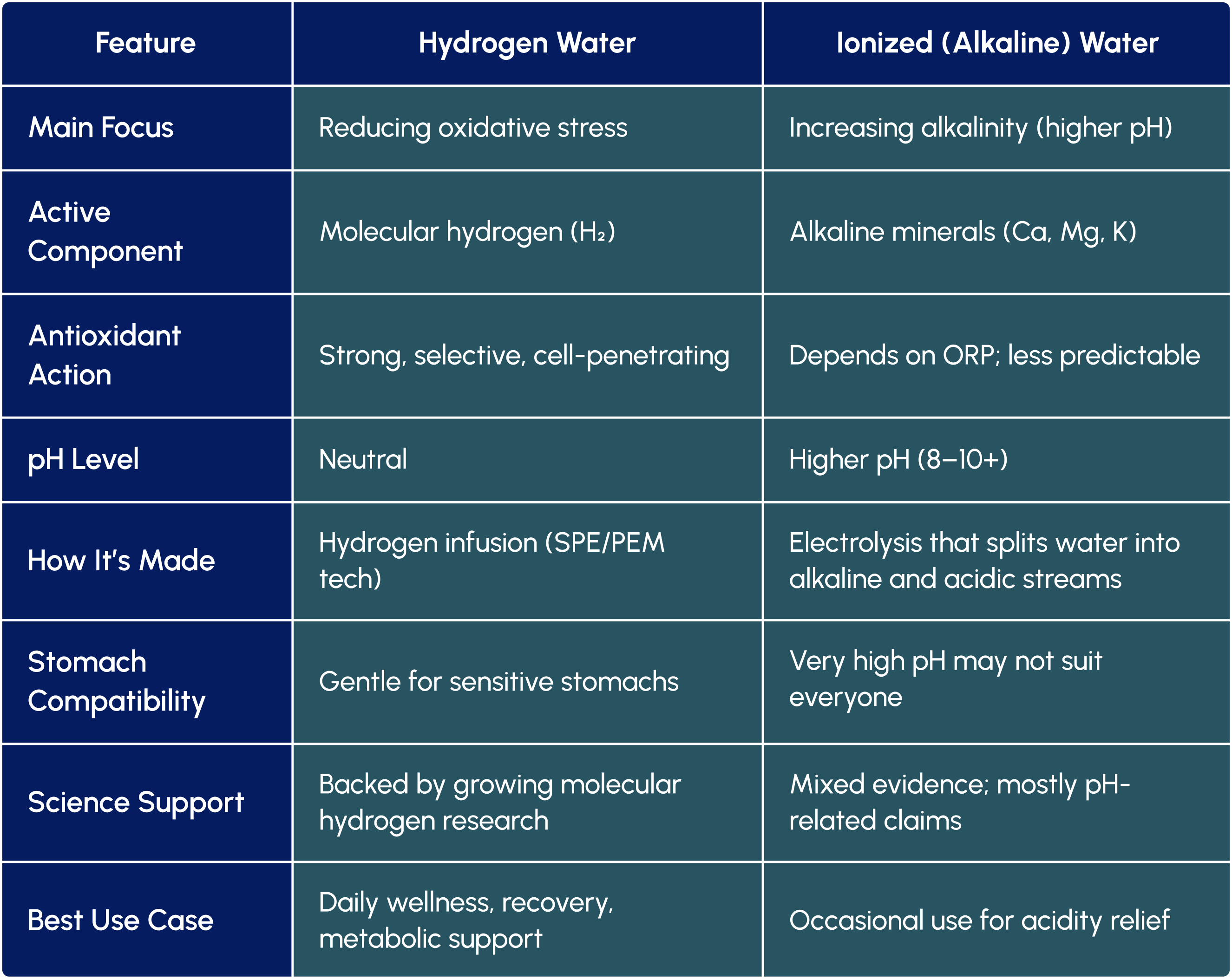
1. How They’re Made
- Ionized Water: Produced by altering the pH through electrolysis, creating separate alkaline and acidic streams. The focus is on changing pH, not adding hydrogen.
- Hydrogen Water: Produced by infusing pure molecular hydrogen (H₂) into water without significantly altering pH. Hydrogen bottles and generators dissolve H₂ directly into the water.
2. Key Active Component
- Ionized Alkaline Water: Contains alkaline minerals and a higher pH. Antioxidant potential depends mostly on ORP.
- Hydrogen Water: Contains molecular hydrogen. A selective antioxidant with strong cell penetration ability.
3. Antioxidant Mechanism
- Ionized Water: Relies on negative ORP created during electrolysis. The antioxidant effect varies by device and mineral content.
- Hydrogen Water: Uses molecular hydrogen, which can reach mitochondria and even cross the blood–brain barrier. It selectively reduces oxidative stress linked to aging and inflammation.
4. Digestive Compatibility
- Ionized Water: Very high pH (9.5–11) may not suit everyone, especially long-term or for sensitive stomachs.
- Hydrogen Water: Maintains a neutral pH, making it suitable for daily use, fasting routines, gut-sensitive users, and athletes.
5. Practicality
- Ionizers: Output varies widely depending on water hardness, voltage, electrode wear, and maintenance.
- Hydrogen Bottles: Produce consistent, high-purity H₂ (up to 8 ppm with SPE/PEM tech).
Here is a comparison table for your quick view:
Also read: Difference and Effects of Hydrogen Water and Alkaline Water on Body pH
Which Water Should You Choose?
Choosing between ionized alkaline water and hydrogen water depends on preference, goals, taste, lifestyle, and convenience. Both options serve different needs, so the right choice is the one that fits naturally into your daily routine.
Choose Ionized Alkaline Water If You:
- Prefer a higher pH drink that feels gentler after acidic or spicy foods.
- Enjoy the smoother mouthfeel that alkaline water often provides.
- Want a simple way to increase the pH of your drinking water at home.
- Already use a household ionizer and prefer sticking to a familiar system.
- Are exploring pH-based hydration methods for occasional digestive comfort.
Avoid or Reconsider Ionized Water If You:
- Have a sensitive stomach that reacts to very high pH levels.
- Want predictable results regardless of water source or device condition.
- Prefer low-maintenance habits and do not want to rely on ionizer upkeep.
- Travel often and cannot access your ionizer consistently.
Choose Hydrogen Water If You:
- Want targeted antioxidant support without altering pH.
- Prefer water that feels neutral, gentle, and suitable for all-day drinking.
- Have a sensitive stomach and want a hydration option that avoids strong alkalinity.
- Want hydration that supports exercise recovery, fasting routines, or metabolic health.
- Value convenience and portability, since hydrogen bottles work at home, at work, or during travel.
- Prefer consistent hydrogen levels, which SPE and PEM bottles can deliver reliably.
Hydrogen Water is Also a Fit If You:
- Want a single hydration choice you can drink daily without adjusting your diet.
- Prefer a device that charges like a phone and produces fresh H₂ anywhere.
- Want a wellness routine that does not depend on water hardness, plumbing quality, or ionizer conditions.
The best choice depends on how you live. Ionized water suits those who want an alkaline taste and occasional digestive balance. Hydrogen water suits those who want consistent daily hydration with antioxidant potential and minimal maintenance. Pick the option that you can enjoy every day, and that aligns with your personal wellness goals.
Related: Health Effects and Side Effects of Hydrogen Water: Myth or Reality?
Conclusion
Ionized alkaline water can offer a smoother drinking experience, gentler acidity, and supportive hydration for people who enjoy higher pH beverages. Hydrogen water provides neutral pH, targeted antioxidant activity, and everyday convenience. Both options have their place, and the right choice depends on your taste, comfort, lifestyle, and wellness goals. What matters most is choosing a water type you can drink consistently and enjoy as part of your daily routine.
If you want a practical, research-aligned option that fits busy schedules and supports whole-body wellness, hydrogen water is the more versatile choice.
Upgrade your routine with clean, high-purity hydrogen water. Shop Dr. Water hydrogen bottles today.
FAQs on Ionized Water Benefits
1. What is the main benefit of drinking ionized alkaline water?
The main benefit is its higher pH, which many people find soothing after acidic meals or digestive discomfort. Some users also prefer its smoother taste and gentler feel.
2. Does ionized water help with hydration?
Yes, many people report that ionized water feels easier to drink and helps them stay hydrated. The experience varies by individual, since hydration depends more on intake consistency than pH alone.
3. Can ionized water support digestion?
Some individuals find relief from occasional acidity or mild digestive discomfort, especially after spicy or heavy meals. Results differ based on personal tolerance to high pH.
4. Is ionized water good for exercise recovery?
A few early studies suggest that alkaline water may support reduced blood viscosity after intense exercise, which can improve comfort during recovery. More research is needed for firm conclusions.
5. Can anyone drink ionized alkaline water daily?
Most healthy adults can, but extremely high pH water may not suit those with sensitive stomachs. People who prefer neutral pH or want targeted antioxidant support may find hydrogen water more comfortable for daily use.