TLDR
H2 blue drops use methylene blue, a dye that loses its color when hydrogen reduces it. Add a drop or two to a fresh sample, watch how fast and how fully the blue clears, and compare it against a reference chart. It is not lab-grade precision, but it is a real way to check that your bottle is doing something rather than nothing.

Why test instead of trust the label
Anyone can print a number on a box. The only way to know what your specific bottle of water is actually carrying is to test it, whether that is an on-device sensor or a simple reagent test you run yourself.
This matters more the higher the claimed number gets.
A bottle claiming several thousand ppb should show visible, fast results on a methylene blue test, not a faint, slow one.
What H2 blue drops actually measure
Methylene blue is a dye that is blue in its oxidized form and clear in its reduced form. Dissolved hydrogen gas is a reducing agent, so when you add it to hydrogen-rich water, the color fades as hydrogen reacts with the dye.
Faster fading and a fuller clear generally point to more dissolved hydrogen in the sample. It is a qualitative visual check, not a precise ppb readout, so treat it as a sanity check rather than a lab certificate.
How to run the test step by step
- Run a fresh electrolysis cycle and pour a small sample immediately, since dissolved hydrogen fades over time
- Add one to two drops of methylene blue reagent to a clear glass of the sample
- Gently swirl once, then let it sit without shaking
- Time how long it takes for the blue color to fade, noting whether it clears fully or only partially
- Compare the result against a control glass of plain, non-electrolyzed water with the same drops added
Test the water as soon as possible after the cycle finishes. Waiting even ten or fifteen minutes with the bottle open lets meaningful dissolved gas escape before you even get to testing it.
How to read the color response
| Result | Rough interpretation |
|---|---|
| No visible fading after several minutes | Little to no dissolved hydrogen detected |
| Slow, partial fading | Low to moderate dissolved hydrogen |
| Fast, full clearing within a minute or two | Higher dissolved hydrogen concentration |
The control glass matters here. If your plain water control also fades somewhat, something in your test process, not the bottle, is likely the issue.
What skews a reading
A few common mistakes make this test unreliable if you are not careful.
- Testing water that sat too long after the cycle, letting hydrogen escape before the test even starts
- Shaking the sample vigorously, which can off-gas dissolved hydrogen during testing
- Using a dirty or previously used glass with residue that affects the dye
- Skipping the control glass, so you have nothing to compare the result against
Without a control glass, you cannot tell whether a slow fade is a weak bottle or a flawed test.
FAQ
What do H2 blue drops actually test for?
They test for dissolved hydrogen gas using methylene blue dye, which loses its blue color when reduced by hydrogen. Faster, fuller fading suggests more dissolved hydrogen in the sample.
Can I get an exact ppb number from a reagent test?
Not precisely. It is a visual, relative test best used to compare samples or confirm a bottle is producing dissolved hydrogen, rather than a substitute for an on-device sensor reading.
Why does timing matter so much for this test?
Dissolved hydrogen escapes water quickly once it is exposed to air. Testing immediately after the electrolysis cycle gives a more accurate picture than testing water that has been sitting.
Does the Hydrator Max show a ppb reading without needing drops?
Yes, it measures peak dissolved hydrogen on-device, reaching up to 10,000 ppb, so you can see a real number without running a separate reagent test.
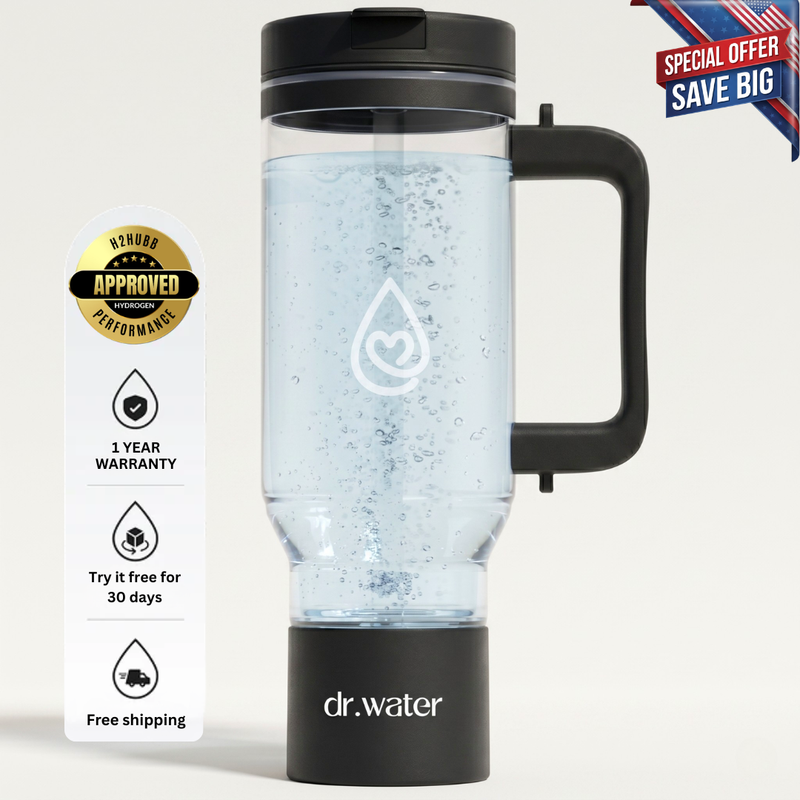
If you want a bottle that shows you the number directly, the Hydrator Max measures its own output on-device and comes with a 30-day risk-free trial to test against whatever you use now.
⚕️ Clinicians' Choice
2,033 clinicians share Dr. Water on VerifiedMD without compensation.