TLDR
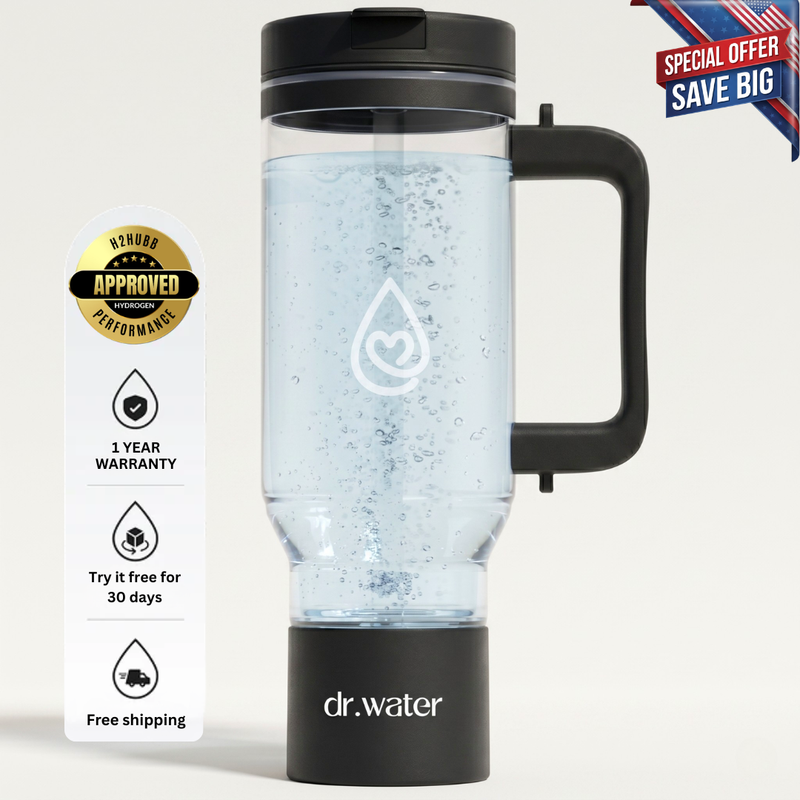
Visible bubbles are hydrogen gas that has already left the water, which is the opposite of what you want. Dissolved hydrogen is invisible. A bottle that fizzes dramatically is often showing you wasted gas, not proof of a strong dose.

Why bubbles are a marketing trick
Fizzy hydrogen water tablets and cheap generators lean hard on visible bubbles because bubbles feel like proof something is working. It is an easy visual to sell.
The problem is that a bubble you can see rising to the surface is gas that is already leaving the water. Dissolved gas, the kind that actually stays in solution, does not form visible bubbles at all.
Visible bubbles are hydrogen gas that has already left the water, which is the opposite of what you want.
What's dissolving vs. escaping
When hydrogen gas is produced during electrolysis, some of it dissolves into the water and some of it forms bubbles that rise and escape into the air. The ratio between the two depends heavily on pressure and how the system is sealed.
An open, unsealed system produces a lot of visible bubbling because most of the gas has nowhere to go but up and out. A sealed, pressurized system holds more of that gas in solution, which paradoxically means less visible fizz for a higher actual dissolved concentration.
Fizzy tablet vs. sealed generator
| Method | Visible bubbling | Typical dissolved outcome |
|---|---|---|
| Effervescent tablet in open glass | Heavy, immediate fizz | Much of the gas escapes before you drink |
| Open-air electrolysis | Moderate bubbling during the cycle | Capped near 1.6 ppm by saturation limits |
| Sealed, pressurized SPE/PEM electrolysis | Minimal visible fizz | Higher dissolved concentration, up to 10,000 ppb measured on-device |
It is counterintuitive that the quietest, least fizzy option can carry the most dissolved gas. That is exactly what happens when a chamber is sealed and pressurized instead of left open to the air.
Why venting matters
Electrolysis produces more than hydrogen. Depending on the water and the method, it can also produce byproduct gases like chlorine or ozone, which you do not want dissolving into your drinking water.
- A properly designed SPE/PEM system vents these waste gases out of the chamber separately
- Hydrogen stays dissolved in the sealed, pressurized side of the process
- Waste gas is expelled, not left to mix back into the water you drink
The quietest, least fizzy option can carry the most dissolved gas.
How to tell the difference at home
You do not need a lab to get a rough sense of what is actually happening in your bottle.
- Watch how long visible bubbling lasts after you open the bottle. Longer, heavier fizz usually means more gas already escaped
- Check whether the device gives you an on-device ppb or ppm reading instead of relying on how it looks
- Run a methylene blue reagent test on a fresh sample to check for dissolved hydrogen directly
- Compare a quiet, minimally fizzy sample against a heavily fizzy one using the same reagent test
FAQ
Does more fizz mean more hydrogen in my water?
Not necessarily, and often the opposite. Visible bubbles are gas escaping the water, while the hydrogen that stays dissolved does not produce visible fizz.
Why do cheap hydrogen tablets fizz so much?
Effervescent tablets release gas quickly in an open glass with nothing sealing it in, so a large share of the hydrogen produced escapes as visible bubbles rather than staying dissolved.
How can I check actual dissolved hydrogen instead of guessing from bubbles?
Look for a device with an on-device ppb readout, or run a methylene blue reagent test on a fresh sample to get a rough visual confirmation of dissolved hydrogen.
Does the Hydrator Max produce visible bubbling?
It runs sealed, pressurized SPE/PEM electrolysis, so visible fizz is minimal even though dissolved concentration reaches a measured 10,000 ppb peak.
The Hydrator Max is built around keeping hydrogen dissolved rather than bubbling away, with a measured on-device readout and a 30-day risk-free trial.
⚕️ Clinicians' Choice
2,033 clinicians share Dr. Water on VerifiedMD without compensation.