TLDR
No. Pure molecular hydrogen is tasteless and odorless, the same as it is in every chemistry textbook. If your hydrogen water tastes or smells like something, that something is coming from mineral scale, your source water, or in a poorly vented device, byproduct gases like ozone, not the hydrogen itself.

What people expect hydrogen water to taste like
New customers often describe expecting something "lighter" or "smoother," almost like carbonation without the fizz. When the water tastes exactly like their filtered water always has, some assume the device isn't working.
That expectation isn't unreasonable, sparkling water tastes different because of dissolved CO2, so it's a fair guess that dissolved H2 might do something similar. It doesn't, and the reason is straightforward chemistry.
Why pure H2 has no taste or smell
Molecular hydrogen is a simple diatomic gas with no odor and no flavor compounds. Unlike CO2, which forms carbonic acid in water and creates that recognizable tang, H2 doesn't react with water to form anything that would register on your tongue or nose.
Pure molecular hydrogen has no taste or smell.
So what am I actually noticing then
When people do report a taste or smell change, it's almost always coming from somewhere other than the hydrogen gas itself.
| What you notice | Likely cause |
|---|---|
| Metallic or off taste | Mineral content in tap water, or an electrode issue on a lower-grade device |
| Chlorine-like or sharp smell | Byproduct gases from tap water electrolysis on a poorly vented device |
| Slightly different mouthfeel | Often psychological expectation rather than a measurable chemical change |
| Chalky residue on the chamber | Mineral scale buildup, unrelated to the hydrogen itself |
A properly vented device using RO or distilled water shouldn't introduce any of these. If yours does, the source is usually the water going in or scale building up, not the hydrogen coming out.
The source is usually the water going in or scale building up, not the hydrogen coming out.
How to tell if your bottle needs cleaning
Visible white or chalky film inside the chamber usually means mineral scale from harder source water, which a citric acid descale clears up. A sharper chemical smell during the cycle itself, not after, points toward venting or water source rather than scale.
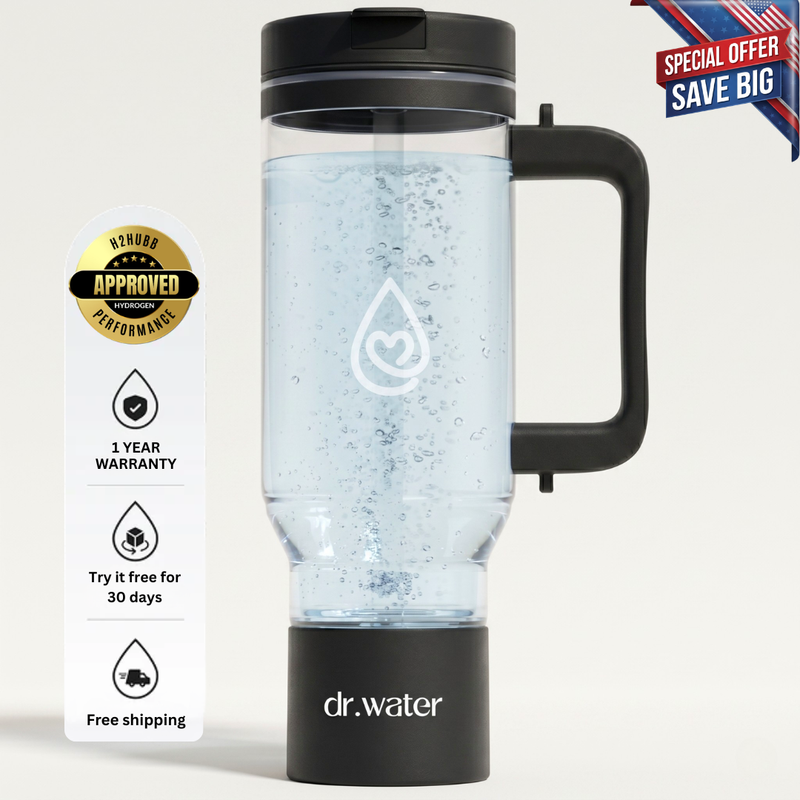
We built the Hydrator Max with a 60-second UV self-clean cycle and recommend RO or distilled water specifically to keep scale from building up in the first place, since scale is the most common cause of any taste change customers report.
Most of the taste questions I get resolve the same way, someone switches from tap to RO or distilled water, runs one descale cycle, and the issue disappears. It's rarely the hydrogen itself causing the complaint.
FAQ
Does hydrogen water taste different from regular water?
It shouldn't. Pure molecular hydrogen has no taste or smell, so properly generated hydrogen water should taste the same as the water you started with.
Why does my hydrogen bottle smell a little chemical during the cycle?
That's more likely a byproduct gas issue from tap water electrolysis on a poorly vented device, or mineral content in your source water, not the hydrogen itself, which is odorless.
Should I be worried if I notice a metallic taste?
Check your source water first, since mineral content is the most common cause. If it persists with RO or distilled water, that's worth looking at the electrode and chamber material.
Does using RO or distilled water prevent taste and smell issues?
Yes, RO and distilled water reduce the mineral scale buildup that's usually behind taste changes, which is why we recommend them over hard tap water for electrolysis cycles.
If you want to see this engineering for yourself, the Hydrator Max comes with a 30-day risk-free trial. Run it on your own water for a month, and if it is not for you, send it back.
⚕️ Clinicians' Choice
2,033 clinicians share Dr. Water on VerifiedMD without compensation.