TLDR
No meaningful overdose risk has been documented. Molecular hydrogen is non-toxic, and your body simply exhales what it does not use through your lungs, the same way it handles excess CO2. Human trials have used concentrations well above typical hydrogen water levels without reported adverse effects tied to the hydrogen itself.

Why "overdose" is the wrong word for a gas like this
Overdose usually implies a substance builds up in the body past a toxic threshold. Molecular hydrogen doesn't work that way, it's an inert, non-toxic diatomic gas that doesn't accumulate in tissue or organs the way a drug or heavy metal can.
That doesn't mean "unlimited is fine" as a blanket statement about anything, but it does mean the framing of an "overdose" from drinking hydrogen water doesn't map onto how this molecule actually behaves in the body.
What happens to hydrogen your body doesn't use
Hydrogen gas that isn't absorbed or used gets exhaled through your lungs, the same basic exit route your body uses for excess carbon dioxide. There's no known storage depot for excess molecular hydrogen in human tissue.
There's no known storage depot for excess molecular hydrogen in human tissue.
What actual safety data looks like
Clinical hydrogen research has tested a range of delivery methods and doses, several well above what a typical hydrogen water bottle produces.
| Delivery method | Typical dose range studied | Reported hydrogen-related adverse effects |
|---|---|---|
| Hydrogen-rich water, oral | Roughly 0.5 to 1.6 ppm dissolved (500-1,600 ppb) | None commonly reported at these levels |
| Hydrogen gas inhalation, clinical settings | Up to several percent of inhaled gas mixture | Studied specifically for safety, hydrogen itself considered non-toxic |
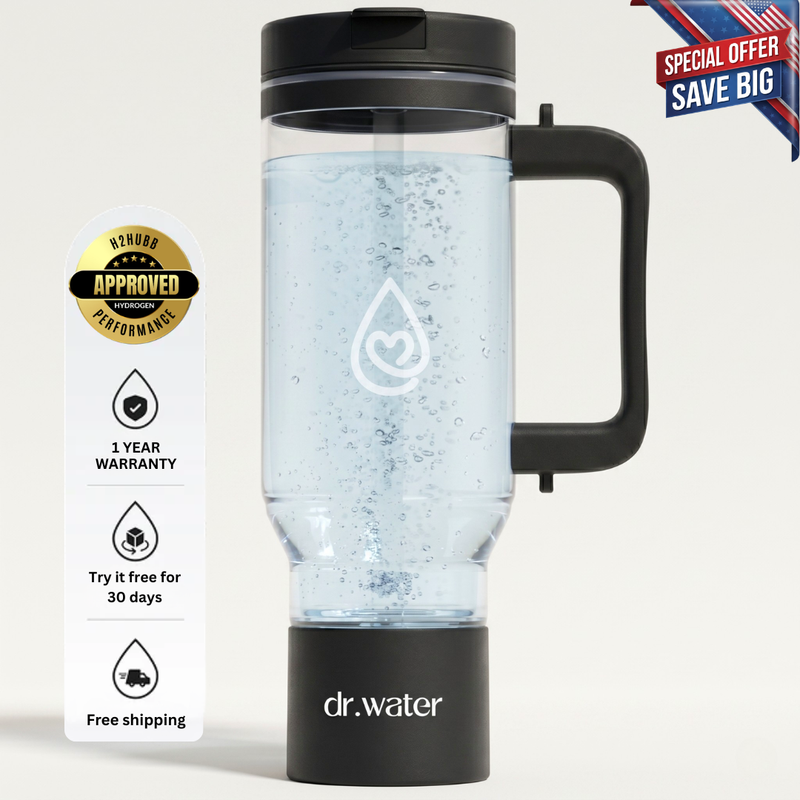
| Hydrator Max | Up to 10,000 ppb (10 ppm) dissolved | Not a clinical trial, product spec measured on-device |
The Hydrator Max's 10,000 PPB peak is on the higher end of consumer hydrogen water devices, but it's still a dissolved gas concentration, not a pharmaceutical dose with a toxicity ceiling.
Where real hydrogen safety limits do exist
The genuine safety limits around hydrogen are about the gas form in air, not the dissolved form in water. Hydrogen becomes a combustion risk above roughly 4% concentration in open air with an ignition source present, an entirely separate issue from drinking it.
Drinking hydrogen-dissolved water doesn't create that kind of concentrated gas environment in your body. Your stomach and gut aren't a sealed, ignitable air pocket.
Your stomach and gut aren't a sealed, ignitable air pocket.
People sometimes ask if drinking several bottles a day compounds into a real risk. Based on the safety data available, it doesn't appear to work that way, since the exhalation pathway scales with how much dissolved gas is actually absorbed, not a fixed daily allowance that stacks up over time.
FAQ
Can you drink too much hydrogen water?
There's no documented overdose risk from molecular hydrogen itself. It's non-toxic and your body exhales what it doesn't use through your lungs, similar to how it clears excess CO2.
Does hydrogen build up in the body over time with regular use?
No known accumulation has been documented. Molecular hydrogen doesn't behave like a substance that stores in tissue, it's cleared through normal respiration.
Is 10,000 ppb too much hydrogen to drink?
It's a dissolved gas concentration, not a pharmaceutical dose, and it's within the range of what human trials on hydrogen-rich water and hydrogen gas inhalation have studied without reported adverse effects tied to the hydrogen itself.
Is inhaling hydrogen gas different from drinking hydrogen water?
Yes, different delivery method and different safety considerations, since inhaled gas concentration in air relates to flammability limits, while dissolved gas in water does not create that kind of environment.
If you want to see this engineering for yourself, the Hydrator Max comes with a 30-day risk-free trial. Run it on your own water for a month, and if it is not for you, send it back.
⚕️ Clinicians' Choice
2,033 clinicians share Dr. Water on VerifiedMD without compensation.